
Dinner recipes
Crispy Chicken Parmesan With Mozzarella and a Golden Crust

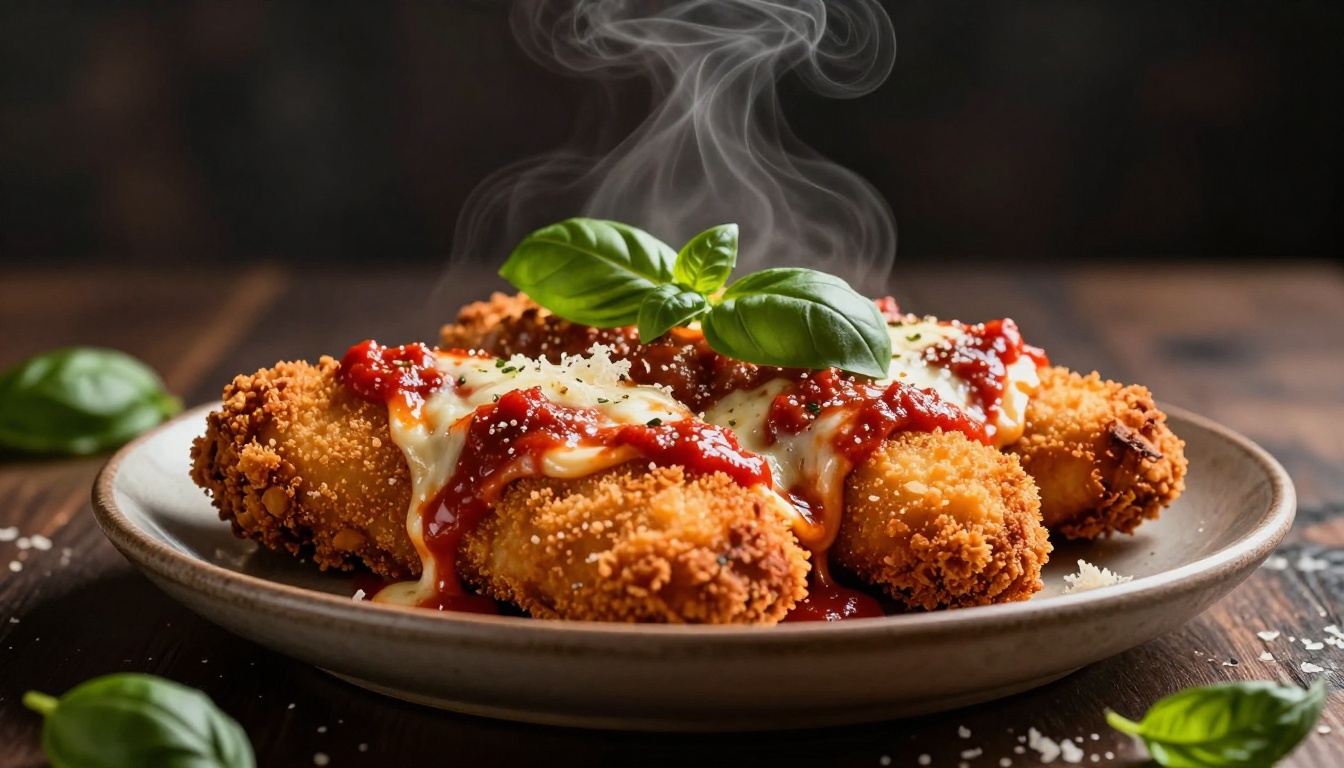
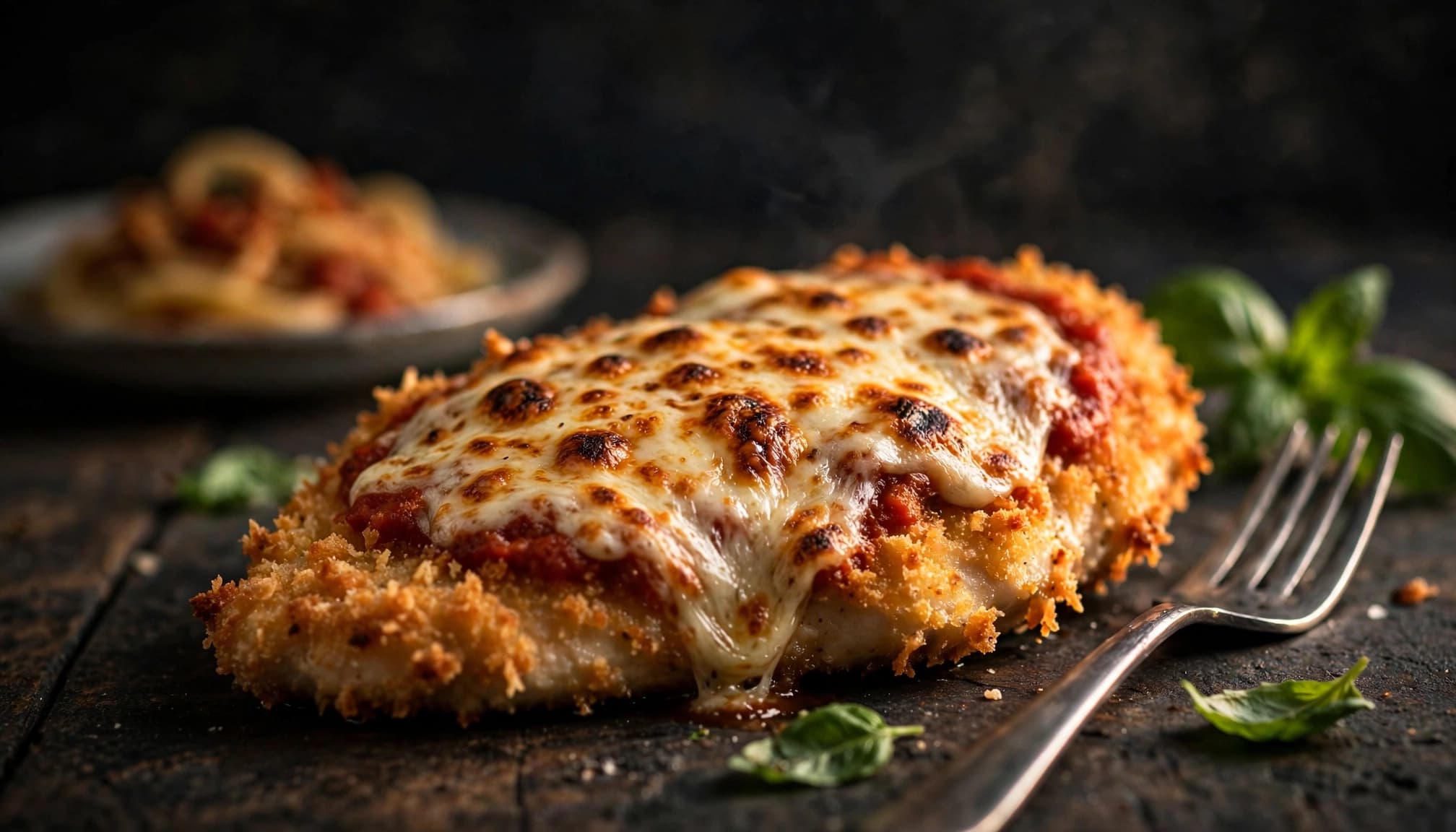
Golden, crunchy chicken under warm marinara and melted mozzarella is a dinner worth making at home. The trick is to give the breading a quick pan-fry, then finish the cutlets in the oven with a light topping so the crust stays crisp.
You don’t need to guess when the chicken is done. Pound it evenly, coat it well, and use a thermometer to check that the thickest part reaches 165°F. Start with the cutlets and a simple three-bowl breading station.
Crispy Chicken Parmesan Recipe With Mozzarella
This recipe makes four servings from two large chicken breasts. Slice each breast horizontally to make four thinner cutlets, then fry them in batches. Have a meat mallet, three shallow bowls, an oven-safe skillet or baking sheet, and an instant-read thermometer ready.
Prep: Allow time to slice and bread the chicken, plus a 5 to 10 minute rest for the coating. Cook: Fry each cutlet for about 2 to 4 minutes per side, then finish it in the oven until it reaches 165°F. Batch size and cutlet thickness will affect the total time.
For four servings, gather:
- 2 large boneless, skinless chicken breasts
- About 1/2 cup all-purpose flour for dredging
- 2 large eggs
- 1 cup panko or Italian breadcrumbs
- 1/2 cup freshly grated Parmesan
- Italian seasoning and garlic powder, to taste
- Salt and freshly ground black pepper, to taste
- Olive oil, enough to form a thin layer in the skillet
- About 1/2 cup marinara, plus more for serving if you like
- Shredded low-moisture mozzarella, enough to lightly cover each cutlet
Panko gives the crust a more pronounced crunch. Italian breadcrumbs have a finer texture and often come pre-seasoned, so taste the crumb mixture before adding much more seasoning. Freshly grated Parmesan brings savory flavor to the coating; finely grated cheese also mixes through the crumbs more evenly than large shreds.
Low-moisture mozzarella is a good choice for the topping because it melts without releasing as much liquid as fresh mozzarella. Keep the marinara and cheese within the top of each cutlet rather than piling them on. You want a little of that golden breading visible around the edges when dinner reaches the table.
How to Make Chicken Parmesan With a Golden, Crunchy Crust
Set an oven rack in the center and heat the oven to 400°F to 425°F before you start frying. That way, the browned cutlets can go straight in for their short finish. Keep the marinara and mozzarella nearby, but wait to add them until after the chicken leaves the skillet.
Pound the chicken and set up the breading station
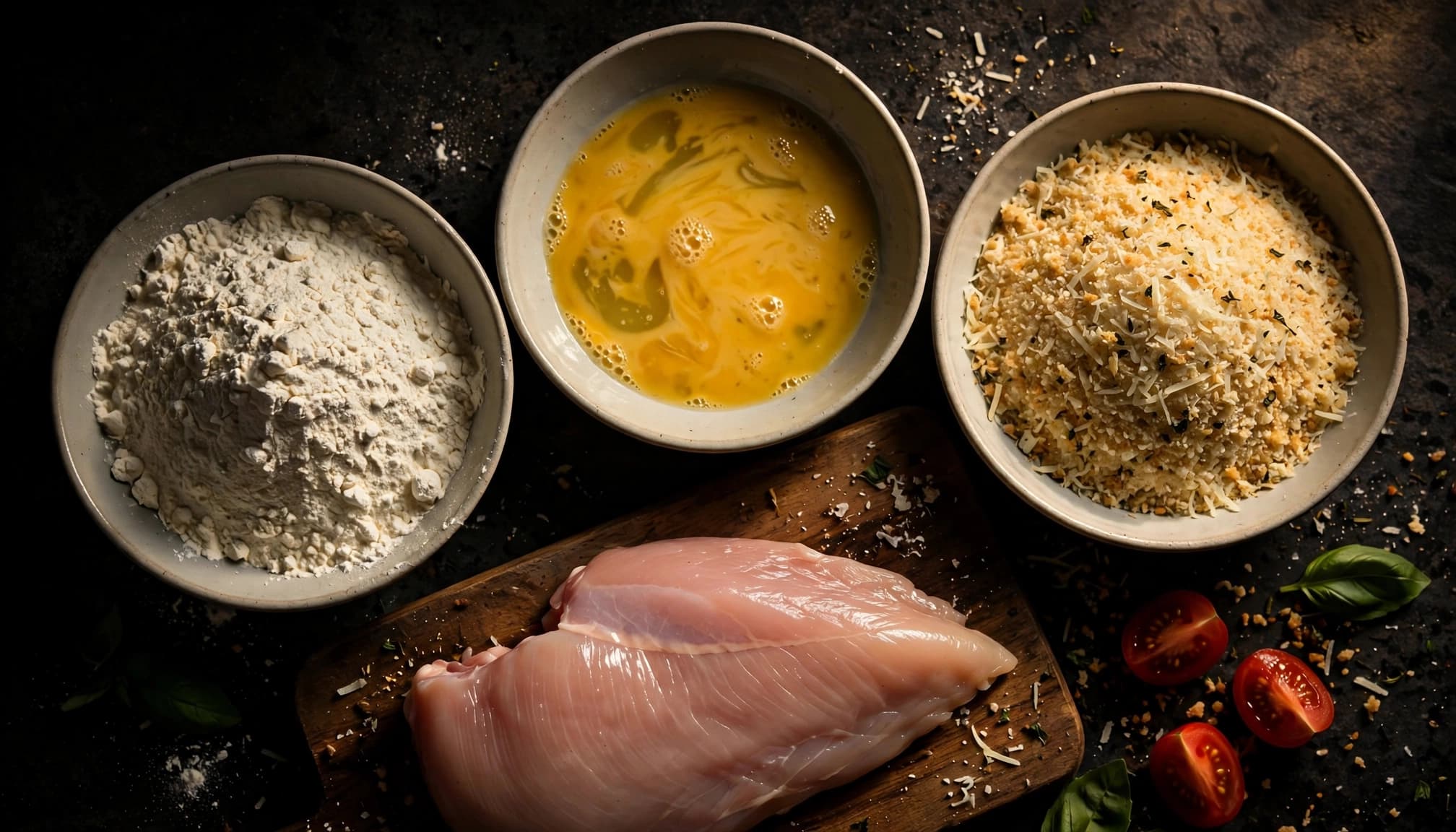
Slice each breast horizontally through the middle to make two cutlets. If any section is thicker than the rest, place it between sheets of plastic wrap and gently pound it to about 1/2 inch thick. Even thickness helps the chicken cook at the same rate across the cutlet.
Pat the chicken dry with paper towels, then season both sides with salt and pepper. Put the flour in one shallow bowl and beat the eggs in a second. In a third bowl, combine the breadcrumbs, Parmesan, Italian seasoning, and garlic powder.
Coat one cutlet at a time. Dredge it in flour and shake off the excess; dip it in egg and let the extra drip away. Press it into the crumbs on both sides, then place it on a clean plate. Rest the breaded cutlets for 5 to 10 minutes so the coating has a chance to adhere.
Pan-fry until golden, then finish in the oven
Pour enough olive oil into a skillet to make a thin, even layer. Heat it over medium heat until a few breadcrumbs sizzle when added. Fry the chicken in batches, leaving space between cutlets so the oil stays hot and the breading browns rather than steams.
Cook for about 2 to 4 minutes per side, turning once when the underside looks deeply golden. The exact time depends on the pan, heat, and chicken thickness. If the crumbs darken too quickly, lower the heat.
Transfer the cutlets to a rack set over a baking sheet, or use an oven-safe skillet. Spoon a modest amount of marinara onto the center of each piece and add mozzarella. Bake uncovered until the cheese melts and an instant-read thermometer inserted into the thickest part of the chicken reads 165°F. The USDA safe temperature chart gives that temperature for poultry. Check the chicken rather than relying on the oven clock.
Keep the crust crisp under the sauce and cheese
Small details make a difference once the chicken is breaded. Damp cutlets leave the flour with little to grip, while a heavy flour layer can turn pasty under the egg. Excess egg can also make the crumb coating slide.
In the skillet, give each cutlet room and resist moving it before the first side has browned. Later, put sauce on top, not underneath, and leave a border of crust around it. Baking without a cover lets moisture escape. A lighter topping gives you melted cheese and marinara in each bite without burying the crunch you worked for.
Easy Variations, Serving Ideas, and Leftover Tips
The pan-fried version gives you the crispest coating, but you can adjust the cooking approach or sides to fit your dinner plans. Leftovers need a little more care because sauce naturally softens the breading over time.
Choose pan-fried or baked chicken Parmesan
For the strongest golden crust, pan-fry the breaded chicken before its oven finish. The oil makes direct contact with the crumbs, helping them brown quickly. Then the oven melts the cheese while the chicken reaches a safe internal temperature.
A fully baked version uses less oil and frees you from tending a skillet. Arrange the breaded cutlets on a prepared sheet pan with space between them. Bake until the coating starts to brown, then add marinara and mozzarella near the end rather than covering the crumbs for the entire cook. Use a thermometer to confirm 165°F; baking time will change with thickness and oven performance.
Expect the baked coating to be softer than the pan-fried one, especially beneath the sauce. If crunch is your main reason for making chicken Parmesan tonight, stick with the skillet.
Serve it with pasta, salad, or vegetables
Spaghetti is an easy partner, especially if you warm extra marinara for the pasta instead of pouring it over the chicken. Another pasta shape works just as well when you want something that holds the sauce.
For a simpler plate, add a green salad or roasted broccoli. Garlic bread is a good choice when you want something to scoop up extra sauce. Finish the chicken with a little more grated Parmesan and a few fresh basil leaves, if you have them. Serve promptly, while the cheese is warm and the exposed edges of the crust are still crisp.
Store and reheat leftovers without losing all the crunch
Let leftovers cool, then refrigerate them promptly in an airtight container. Use them within 3 to 4 days, following the USDA’s leftover storage guidance.
To reheat, place the chicken on a rack over a baking sheet when possible. Warm it in a 375°F oven until the center reaches 165°F. The rack lets hot air reach more of the coating, though the sauced area won’t regain its freshly fried crunch. A microwave is convenient for a quick lunch, but its steam tends to soften the breading further.
Key Takeaways
- Pound the cutlets to an even thickness so the breading browns while the chicken cooks through.
- Shake off excess flour and egg, press on the crumbs, and give the coating a short rest.
- Fry without crowding, then add a light layer of marinara and mozzarella for the oven finish.
- Check the thickest part with a thermometer. The chicken is ready at 165°F, regardless of how golden the crust looks.
Frequently Asked Questions
Can I make chicken Parmesan ahead of time?
Yes. You can pound the chicken ahead and keep it covered in the refrigerator. Mix the dry breadcrumb coating separately and store it in a sealed container until you’re ready to cook.
For the best texture, bread and fry the cutlets closer to serving, then add sauce and cheese for the oven finish. Discard any dredging ingredients that have touched raw chicken.
Can I use fresh mozzarella instead of shredded mozzarella?
Fresh mozzarella works, but it contains more moisture than low-moisture shredded mozzarella. That extra liquid can soften the crust, particularly where the cheese meets the sauce.
Drain it well and pat it dry before using it. Add a modest amount to each cutlet rather than covering the entire surface.
Why is my chicken Parmesan coating falling off?
The usual causes are damp chicken, uneven dredging, or too much flour or egg between layers. The crumbs may also pull away if you turn the cutlet before its first side has browned.
Pat the chicken dry, shake off excess flour and egg, and press the crumbs on gently. Let the coated cutlets rest before frying, then turn them only when the crust has set.
Can I freeze cooked chicken Parmesan?
Yes. Cool it, pack it in an airtight, freezer-safe container, and freeze it. The breading may soften after thawing, especially beneath the marinara.
Thaw it in the refrigerator, then reheat it in the oven until the center reaches 165°F. FoodSafety.gov’s temperature guidance lists 165°F for reheated leftovers as well as chicken.
A Crisp, Cheesy Dinner Worth Repeating
Even cutlets, well-pressed Parmesan breadcrumbs, and a quick pan-fry build the golden crust. A light spoonful of marinara and a little mozzarella let that crust share the plate with the sauce and cheese.
Check each cutlet for 165°F, then bring it to the table while the edges are crisp. Add pasta, salad, or your favorite simple side, and dinner is ready.
-

 Manchester United9 months ago
BREAKING NEWS: “I didn’t leave Manchester United because of Ruben Amorim. I left because of this particular player. The way he treated me in the dressing room was unacceptable. If I’m to return, then he has to leave.”
-
Manchester United9 months ago
BREAKING NEWS: “WE WERE TOO HARSH ON HIM” — SIR ALEX FERGUSON URGES MANCHESTER UNITED TO BRING BACK OLE GUNNAR SOLSKJÆR TO OLD TRAFFORD.
-

 Barcelona1 year ago
Breaking News: Anfield is buzzing with excitement! Raphinha has reached a personal agreement with Liverpool. Barcelona is reportedly willing to let him go, and in a recent interview, Raphinha hinted at his admiration for the incoming manager, saying, “If Arne Slot calls, you pick up.”
-

 Premier League1 year ago
Xavi Hernandez has officially signed a three-year contract to become the new head coach of a Premier League club, stepping in after the departure of the previous manager
-
 Real Madrid1 year ago
Jurgen Klopp Reveals Why He Accepted Real Madrid’s Offer to Replace Carlo Ancelotti
-
Liverpool1 year ago
Despite the heartbreak caused by Diogo Jota’s tragic accident, Liverpool FC has brought a glimmer of hope to his grieving family — especially his wife and the three beautiful kids he left behind
-

 Manchester United1 year ago
I’m not suppose to be doing this but as A captain it pains me to see such a great player with potential leave our club,I shed tears when the INEOS announced His departure,this very unfair of Him”, Bruno Fernandez broke down in tears as INEOS confirmed another Man united player departure by the summer
-
Manchester United1 year ago
BREAKING NEWS: Lisandro Martinez spotted in Man United training yesterday as Club doctor confirmed Him fit to start against Lyon – Congratulations Man United fans