
Premier League
Crispy Smashed Potatoes With Garlic and Parmesan

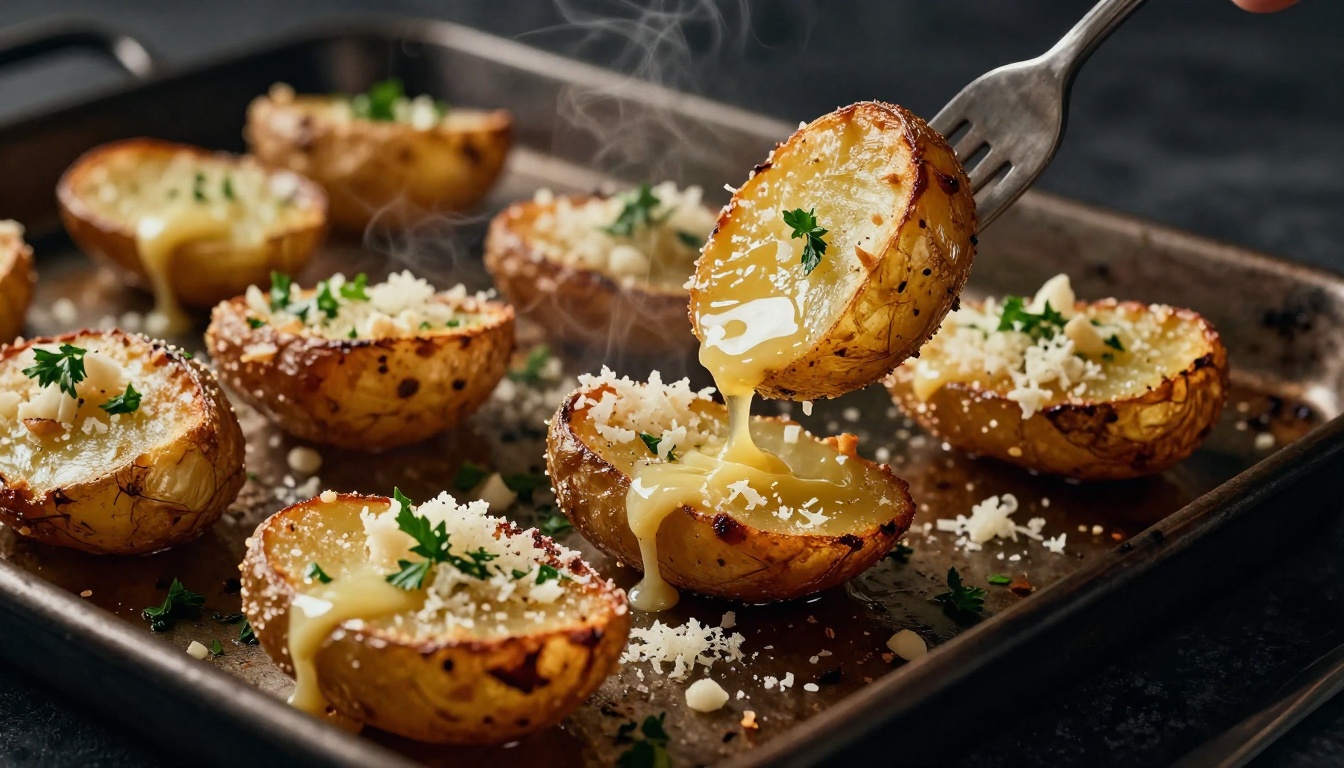
A forkful of potato with a browned, crackly edge is hard to stop at. If yours usually turn out soft, crispy smashed potatoes with garlic and Parmesan give you a practical way to change that: boil them until tender, flatten them gently, then roast the rough surfaces until golden.
You don’t need a special pan or complicated prep. Dry potatoes and room on the baking sheet make the biggest difference, while garlic and Parmesan bring plenty of flavor to the finished dish.
Key Takeaways
- Boil the potatoes until a fork slides through easily, then let surface moisture evaporate before roasting.
- Press each potato gently enough to keep it in one piece. Rough edges create more places to brown.
- Give the potatoes space on the baking sheet and keep roasting until the edges feel crisp, not just colored.
- Serve with garlic butter and finely grated Parmesan, adjusting the salt after you taste one.
What You Need for Garlic Parmesan Smashed Potatoes
Choose potatoes that cook evenly
Small potatoes are convenient because each one becomes an individual serving piece. Pick potatoes of similar size so they reach tenderness together. If the bag contains a mix, check the smaller ones first and lift them out as they finish.
Keep the skins on. They help hold the potatoes together under the masher and add texture around the edges. Scrub them well, especially if dirt collects near any shallow eyes.
Gather the seasonings and equipment
You’ll need potatoes, kosher salt, olive oil, black pepper, garlic, unsalted butter, and finely grated Parmesan. Chopped parsley is optional, but its fresh flavor balances the rich topping.
Set out a large pot, a colander, a rimmed baking sheet, and a potato masher or sturdy glass with a flat bottom. A thin spatula helps lift the potatoes later without leaving their crisp undersides behind. Use a baking sheet with enough space to spread the potatoes out rather than stacking them close together.
Why Smashed Potatoes Get Crisp
Start with tender centers
Boiling cooks the interior before the potatoes meet the oven’s dry heat. That lets you focus the roasting stage on browning the outside instead of waiting for a hard center to soften. As Delish’s smashed potato method explains, starting potatoes in cold water helps them cook evenly.
Don’t stop boiling while the center still resists a fork. An undercooked potato takes more pressure to flatten, which can split it into pieces. Drain fully cooked potatoes and let the steam escape before moving them to the sheet.
Create edges without crushing the middle
A smooth, tightly packed potato has less exposed surface to crisp. Gentle pressure opens it into ridges and uneven edges while leaving the center intact. Those broken surfaces pick up oil and brown in the oven.
Give the drained potatoes a chance to dry. Moisture left on the surface has to evaporate before that surface can brown.
Spread them apart after smashing. When potatoes touch, their edges have less contact with the oven’s circulating heat and are more likely to stay soft.
How to Make Crispy Smashed Potatoes With Garlic and Parmesan
Boil and drain
Put the scrubbed potatoes in a pot and add cold water until it covers them by 1 inch. Season the water with 1 tablespoon kosher salt, bring it to a boil, and cook until a fork slides easily through the center. Nerds with Knives’ garlic-Parmesan potato recipe uses that salt and water-covering approach.
Drain the potatoes in a colander. Leave them there until the visible steam has eased and the skins look dry rather than wet. Meanwhile, preheat the oven for high-heat roasting and prepare a rimmed baking sheet.
Flatten and roast
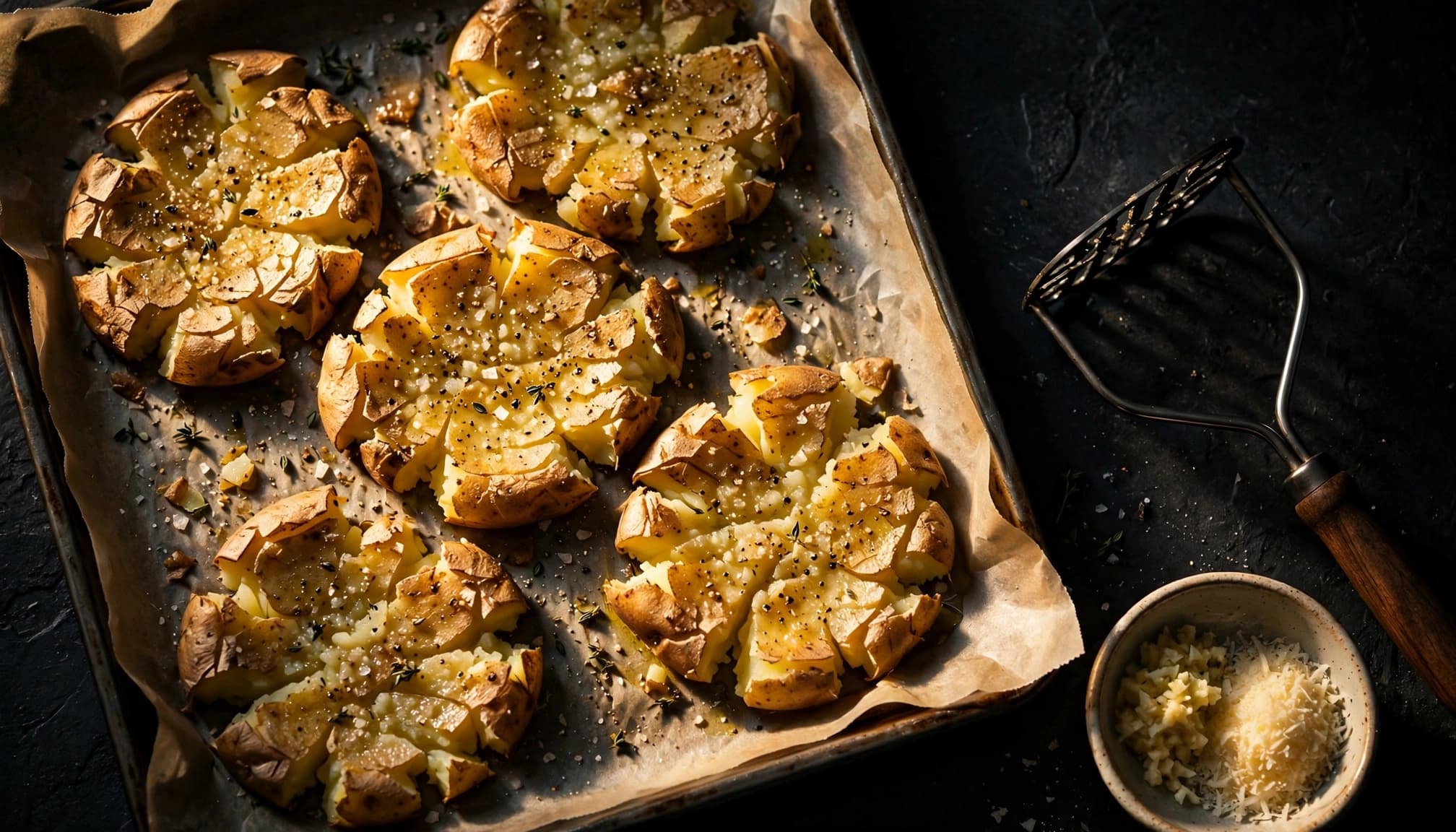
Transfer the potatoes to the sheet, leaving space around each one. Press down with the masher or the bottom of a glass until the potato flattens and its edges split. If one starts to break apart, stop pressing. It can still roast well as long as the pieces stay close together.
Coat the exposed surfaces with olive oil and season with black pepper. Roast until the tops and edges are deeply golden. Check an underside with a thin spatula before removing the sheet; color on top alone doesn’t tell you whether the bottom has crisped.
Bring in the garlic and cheese
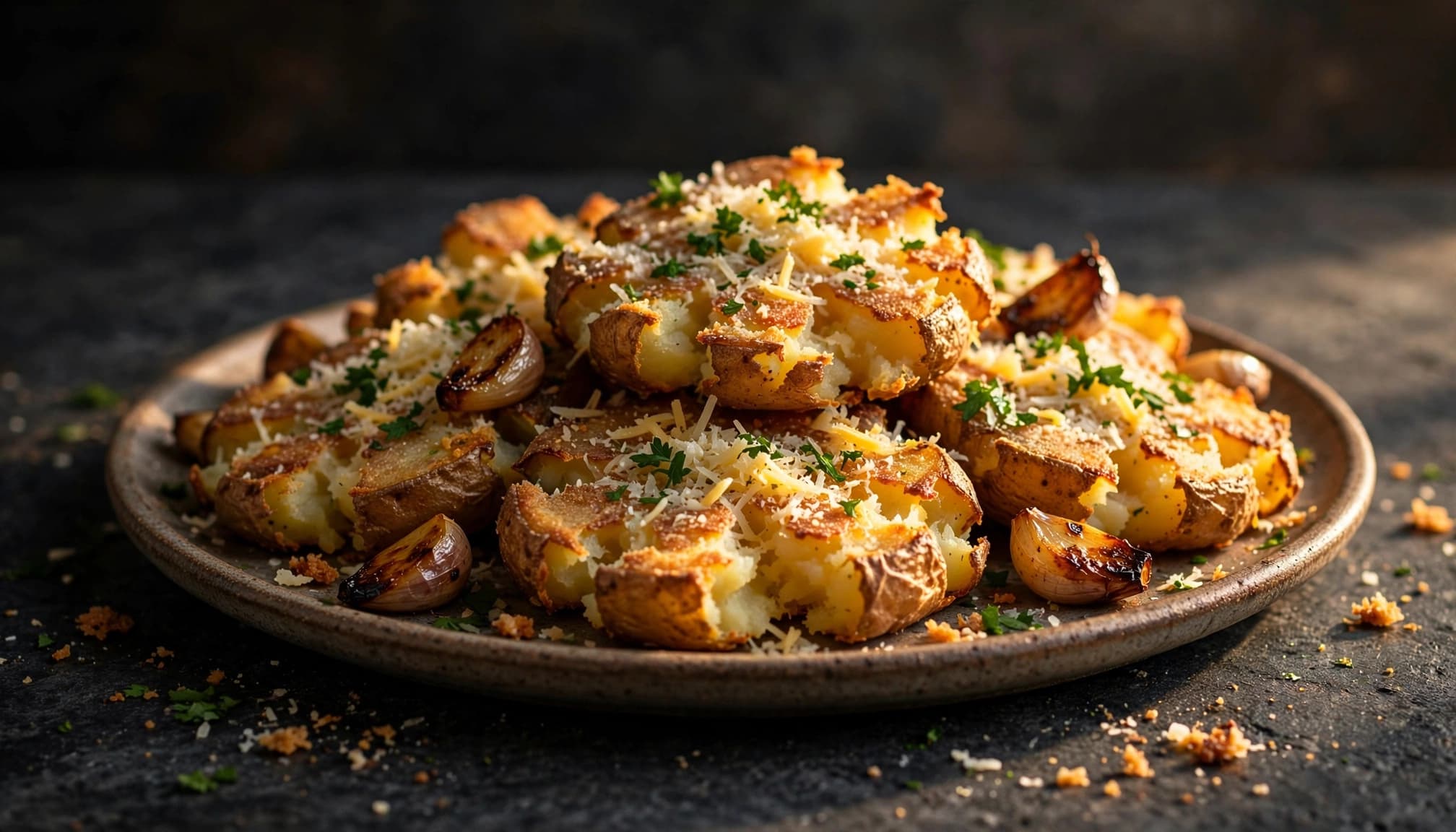
For this version, warm the garlic gently in butter until fragrant, then spoon it over the roasted potatoes. Scatter finely grated Parmesan across them and taste before adding more salt. Garlic butter adds richness without requiring you to guess whether exposed garlic will brown too much in the oven.
The potatoes should still be warm when they reach the table. That way, the butter coats the craggy surfaces and the Parmesan clings to them instead of falling onto the platter.
Getting the Garlic and Parmesan Balance Right
Garlic can taste sharp when raw and bitter when it browns too far. Gentle heat in butter gives you a milder topping that you can control by smell and color. Stir it while it warms, and take the pan off the heat if the garlic begins to darken.
Parmesan brings salt as well as a savory finish, so hold back on any final sprinkle of salt until you’ve tasted a finished potato. Finely grating the cheese helps it settle into the ridges. If you prefer a more distinct cheese topping, set some out at the table.
There are other workable approaches. The Kitchn’s garlic-butter smashed potatoes pair tender boiled potatoes with garlic butter. Whichever way you dress them, let the browned potato edges remain the main attraction.
Fixing Potatoes That Won’t Crisp
If they’re pale or soft
First, check whether the oven had fully heated before the baking sheet went in. Then look at the spacing: crowded potatoes can trap moisture between their edges. Give them more room if needed, and continue roasting until the edges feel firm.
Oil matters, but pooling oil isn’t the goal. Coat the broken surfaces so they can brown, then avoid leaving the potatoes sitting in excess. Next time, let them dry longer after boiling if they looked damp when you smashed them.
If they break apart or stick
A potato that collapses under the masher may have cooked past tender, or it may have been pressed too hard. Use steady, light pressure and stop as soon as the edges open. Broken pieces are still good to eat, although they’ll be harder to lift neatly.
If the undersides stick, slide a thin spatula beneath them rather than pulling from above. Letting the potatoes develop a browned underside before moving them also helps. On the next batch, check that the baking sheet has a light coating of oil where each potato rests.
What to Serve With Them
These potatoes work beside roast chicken, grilled salmon, or a simple omelet. Their salty, crisp edges also welcome something fresh on the plate, such as a green salad or steamed vegetables with lemon.
For a casual spread, serve the potatoes on a platter with the garlic butter spooned over them and Parmesan nearby. Guests can add parsley, an extra grind of pepper, or a little more cheese. If the main dish already has a rich sauce, use less butter on the potatoes so the plate doesn’t feel heavy.
They also make a satisfying snack on their own. The crispest bites are the thin edges, so serve the potatoes soon after roasting rather than leaving them covered, where steam can soften the crust.
Storing and Reheating Leftovers
Let leftovers cool, then refrigerate them in a covered container. The USDA’s leftovers guidance gives cooked leftovers 3 to 4 days in the refrigerator. They won’t stay as crisp in storage, but you can bring back some texture with dry heat.
Reheat the potatoes spread out on a baking sheet in a hot oven, or use an air fryer if they fit without crowding. Warm them until heated through and the edges firm up again. A microwave heats the centers, but it tends to leave the browned surfaces soft.
If you’re planning for leftovers, keep extra garlic butter and Parmesan separate. You can then reheat the potatoes uncovered and add the toppings at the table.
Frequently Asked Questions
Can I boil the potatoes ahead of time?
Yes. Drain them well, let them cool, and refrigerate them in a covered container. When you’re ready to cook, smash them gently and roast until the surfaces are browned and the centers are hot.
Can I use potatoes that were already boiled for another meal?
You can, provided they’re tender enough to flatten and have been stored safely. Pat away surface moisture before smashing. Potatoes that are falling apart may roast as broken pieces rather than tidy rounds, but those pieces can still develop crisp edges.
Will an air fryer work instead of an oven?
Yes, if the flattened potatoes fit in a single layer with room around them. Work in batches rather than piling them up. Check them as they cook, since the exposed edges can brown before the centers are fully heated.
Can I make the dish without dairy?
Use olive oil instead of butter for the garlic and leave off the Parmesan. The potatoes can still brown because their crisp surface comes from boiling, drying, smashing, and roasting. Add parsley or black pepper at the table for more flavor.
Is pre-grated Parmesan okay?
It will add flavor, but finely grated Parmesan from a block usually settles into the potato’s rough edges more easily. If you use pre-grated cheese, scatter it evenly and serve any extra alongside. Taste before adding salt because Parmesan is already salty.
The Crisp Edge Is Worth Waiting For
The trick to crispy smashed potatoes with garlic and Parmesan is to give each stage its job. Boil for a tender center, dry and smash for rough surfaces, then roast until the edges are truly crisp.
Finish with garlic butter and Parmesan, and serve them while those browned edges still crunch.
-

 Manchester United9 months ago
BREAKING NEWS: “I didn’t leave Manchester United because of Ruben Amorim. I left because of this particular player. The way he treated me in the dressing room was unacceptable. If I’m to return, then he has to leave.”
-
Manchester United9 months ago
BREAKING NEWS: “WE WERE TOO HARSH ON HIM” — SIR ALEX FERGUSON URGES MANCHESTER UNITED TO BRING BACK OLE GUNNAR SOLSKJÆR TO OLD TRAFFORD.
-

 Barcelona1 year ago
Breaking News: Anfield is buzzing with excitement! Raphinha has reached a personal agreement with Liverpool. Barcelona is reportedly willing to let him go, and in a recent interview, Raphinha hinted at his admiration for the incoming manager, saying, “If Arne Slot calls, you pick up.”
-

 Premier League1 year ago
Xavi Hernandez has officially signed a three-year contract to become the new head coach of a Premier League club, stepping in after the departure of the previous manager
-
 Real Madrid1 year ago
Jurgen Klopp Reveals Why He Accepted Real Madrid’s Offer to Replace Carlo Ancelotti
-
Liverpool1 year ago
Despite the heartbreak caused by Diogo Jota’s tragic accident, Liverpool FC has brought a glimmer of hope to his grieving family — especially his wife and the three beautiful kids he left behind
-

 Manchester United2 years ago
I’m not suppose to be doing this but as A captain it pains me to see such a great player with potential leave our club,I shed tears when the INEOS announced His departure,this very unfair of Him”, Bruno Fernandez broke down in tears as INEOS confirmed another Man united player departure by the summer
-
Manchester United1 year ago
BREAKING NEWS: Lisandro Martinez spotted in Man United training yesterday as Club doctor confirmed Him fit to start against Lyon – Congratulations Man United fans