
Manchester United
BREAKING NEWS: “Sold for £0, now he has more goals than Fernandes and a higher market value than Cunha — we regret letting him go,” Sir Jim Ratcliffe reflects on a controversial Manchester United exit.

Manchester United’s long-running rebuild continues to spark debate, but few decisions in recent years have divided opinion as deeply as the club’s handling of Mason Greenwood. Now, those debates have resurfaced with renewed intensity following reports that co-owner Sir Jim Ratcliffe has privately expressed regret over how Greenwood’s departure unfolded — particularly in light of the player’s resurgence elsewhere.
Greenwood, who left United without a transfer fee after spending years at the club, is now enjoying a prolific run of form. Statistically, his goal output this season has surpassed that of Bruno Fernandes, and his estimated market value has reportedly risen above that of Wolverhampton Wanderers forward Matheus Cunha. Those numbers alone have reignited conversations among supporters about what Manchester United may have lost.
According to sources close to the ownership group, Ratcliffe has acknowledged that the club underestimated Greenwood’s on-field value at a time when difficult off-field decisions were dominating the conversation.
“From a footballing perspective alone, the numbers are painful to look at,” one source familiar with internal discussions told reporters. “There is a feeling that United did not extract sporting or financial value from the situation.”
THE CONTEXT BEHIND GREENWOOD’S EXIT
Greenwood’s departure from Old Trafford came after a prolonged period of uncertainty. Once regarded as one of the most gifted academy products in Manchester United’s modern history, his explosive pace, two-footed finishing, and instinctive movement had drawn comparisons to elite forwards across Europe.
However, the club’s stance under previous leadership was cautious and ultimately decisive. United opted to sever ties rather than reintegrate him into the squad, choosing reputational risk management over footballing considerations.
At the time, then-manager Erik ten Hag made it clear that the decision aligned with the club’s broader values and structure. United officials insisted the move was collective, not personal, and designed to protect the club’s long-term stability.
Yet football has a way of reopening closed chapters — especially when form, goals, and numbers start telling a different story.
GREENWOOD’S RESURGENCE AND THE NUMBERS THAT HURT
Since leaving Manchester United, Greenwood has rebuilt his career with impressive efficiency. His goal return this season has placed him among the most productive attacking players in his league, drawing interest from multiple European clubs.
Analysts point to three key indicators driving the renewed debate:
- Goal Output – Greenwood’s tally now exceeds that of Bruno Fernandes this season, a comparison that has fuelled online discussions despite the players operating in different roles.
- Market Value Growth – From leaving United at zero transfer value, Greenwood’s estimated valuation has climbed sharply, reportedly surpassing Cunha’s.
- Consistency – Unlike his final months at United, Greenwood is now delivering regularly, scoring across competitions and influencing matches decisively.
For a club still searching for attacking consistency, those figures are impossible to ignore.
RATCLIFFE’S REPORTED REFLECTIONS
Sir Jim Ratcliffe, who has repeatedly emphasized “football-first decisions” since acquiring a stake in Manchester United, is said to view the Greenwood case as a lesson in balancing values with asset management.
While there has been no public statement directly criticizing previous managers, sources suggest that the ownership now believes the club failed to control the narrative and outcome from a footballing standpoint.
“This is not about rewriting history,” a senior club source explained. “It’s about acknowledging that Manchester United did not benefit on the pitch or in the market.”
Importantly, Ratcliffe has not publicly accused anyone of acting out of personal motives. Instead, insiders describe his stance as one of frustration over lost value rather than blame.
TEN HAG’S ROLE AND THE CLUB’S STRUCTURE
During Erik ten Hag’s tenure, decision-making authority was fragmented between football operations, executive leadership, and external oversight. The Greenwood situation unfolded within that complex structure.
Those close to the former manager maintain that he acted within the framework provided to him and that final authority rested above the coaching staff. Still, fans continue to debate whether the club should have found a more pragmatic solution, such as a permanent sale with a significant fee or a structured reintegration plan.
With Ten Hag now gone and Ruben Amorim leading a new era, the Greenwood debate has become symbolic of broader issues in United’s recent past — indecision, slow responses, and financial inefficiency.
FAN REACTION: DIVIDED BUT LOUD
Manchester United supporters remain split. Some argue that the club had no realistic choice and acted responsibly given the circumstances. Others believe United sacrificed footballing competitiveness and financial sense in the process.
What unites both sides is frustration — frustration that United, a club known for maximizing talent, ended up with no return from a player who is now thriving.
LESSONS FOR THE NEW ERA
Under Ratcliffe and INEOS, Manchester United are attempting to modernize decision-making, reduce emotional reactions, and ensure that football strategy aligns with financial planning.
The Greenwood case is now reportedly being used internally as an example of what not to repeat — a situation where time, hesitation, and public pressure led to an outcome that satisfied no one from a sporting perspective.
As United look ahead to future academy prospects and high-value assets, the club is determined to avoid similar scenarios.
CONCLUSION
Manchester United cannot turn back the clock. Greenwood’s chapter at Old Trafford is closed. But his resurgence elsewhere has forced uncomfortable reflection inside the club’s hierarchy.
Sold for £0.
Now outperforming established names.
Now carrying significant market value.
For Sir Jim Ratcliffe and the new United leadership, the message is clear: sentiment and silence are luxuries a modern football club can no longer afford.
-

 Barcelona8 months ago
Breaking News: Anfield is buzzing with excitement! Raphinha has reached a personal agreement with Liverpool. Barcelona is reportedly willing to let him go, and in a recent interview, Raphinha hinted at his admiration for the incoming manager, saying, “If Arne Slot calls, you pick up.”
-

 Premier League7 months ago
Xavi Hernandez has officially signed a three-year contract to become the new head coach of a Premier League club, stepping in after the departure of the previous manager
-
 Real Madrid8 months ago
Jurgen Klopp Reveals Why He Accepted Real Madrid’s Offer to Replace Carlo Ancelotti
-

 Liverpool5 months ago
Despite the heartbreak caused by Diogo Jota’s tragic accident, Liverpool FC has brought a glimmer of hope to his grieving family — especially his wife and the three beautiful kids he left behind
-

 Manchester United8 months ago
BREAKING NEWS: Lisandro Martinez spotted in Man United training yesterday as Club doctor confirmed Him fit to start against Lyon – Congratulations Man United fans
-
Manchester United8 months ago
I’m not suppose to be doing this but as A captain it pains me to see such a great player with potential leave our club,I shed tears when the INEOS announced His departure,this very unfair of Him”, Bruno Fernandez broke down in tears as INEOS confirmed another Man united player departure by the summer
-
 Manchester United8 months ago
BREAKING NEWS: Antony Santos Reveals Ruben Amorim’s “Unfair” Conditions for Manchester United Return.
-
 Manchester United8 months ago
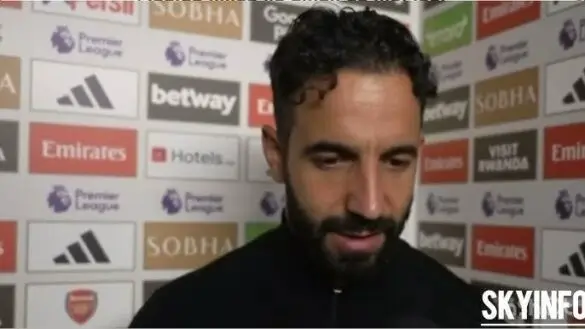
I’m sorry to say this but He can no longer work with me anymore, He’s suspended till transfer window opens”, Ruben Amorim have suspended one Man United player from training activities till transfer window opens after His disastrous performance last night