
Dinner recipes
Easy Cabbage Stir-Fry With Garlic and Vegetables

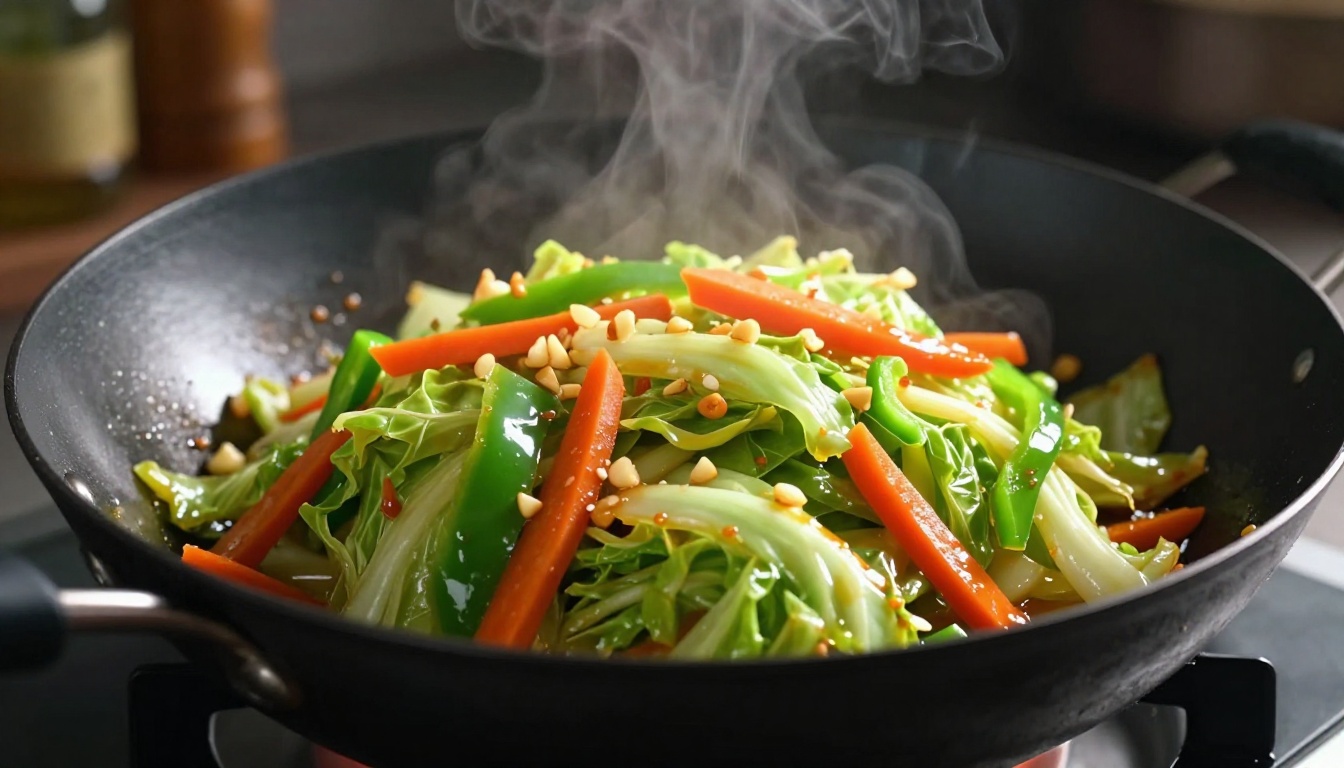
A hot skillet can turn a half head of cabbage into a colorful dinner in minutes. This crisp-tender cabbage stir-fry brings together garlic, soy sauce, and quick-cooking vegetables for plenty of savory flavor without a complicated process.
The secret is simple: prep everything first, cook over high heat, and add the cabbage near the end. Serve it as a light side, pile it over rice, or add protein for an easy weeknight meal.
Easy Cabbage Stir-Fry With Garlic & Vegetables
This easy cabbage stir-fry with garlic and vegetables serves about four people and takes roughly 15 to 20 minutes from chopping to serving. A wok is useful, but a large skillet works well too.
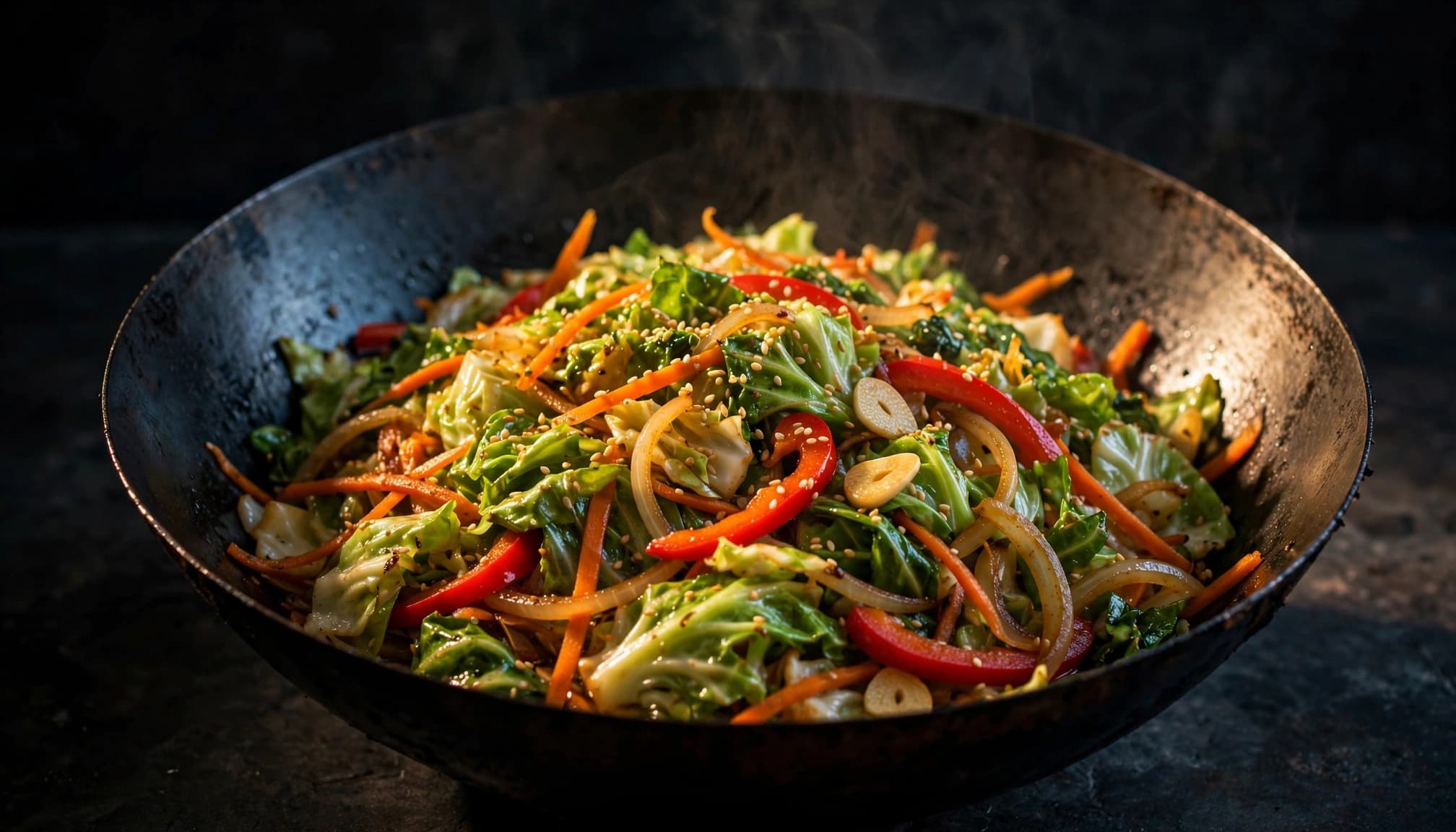
Ingredients That Build Big Flavor
Gather the following ingredients before heating the pan:
- 6 cups thinly sliced green cabbage, about half a medium head
- 2 to 4 garlic cloves, finely minced
- 1 small onion, thinly sliced
- 1 medium carrot, cut into thin matchsticks or small half-moons
- 1 bell pepper, thinly sliced
- 1 to 2 tablespoons neutral oil, such as avocado, vegetable, or canola oil
- 2 tablespoons soy sauce or tamari
- 1 teaspoon toasted sesame oil
- 1 teaspoon rice vinegar, optional
- Fresh ginger, chili flakes, green onions, or sesame seeds, optional
Cabbage gives the stir-fry its volume and gentle sweetness. Onion, carrot, and bell pepper add color and texture, while garlic and soy sauce bring the familiar savory taste. Toasted sesame oil is a finishing ingredient, so a little goes a long way.
Use what you have. Snow peas, mushrooms, zucchini, or bok choy can replace one of the other vegetables without changing the basic method.
How to Choose and Prep the Vegetables
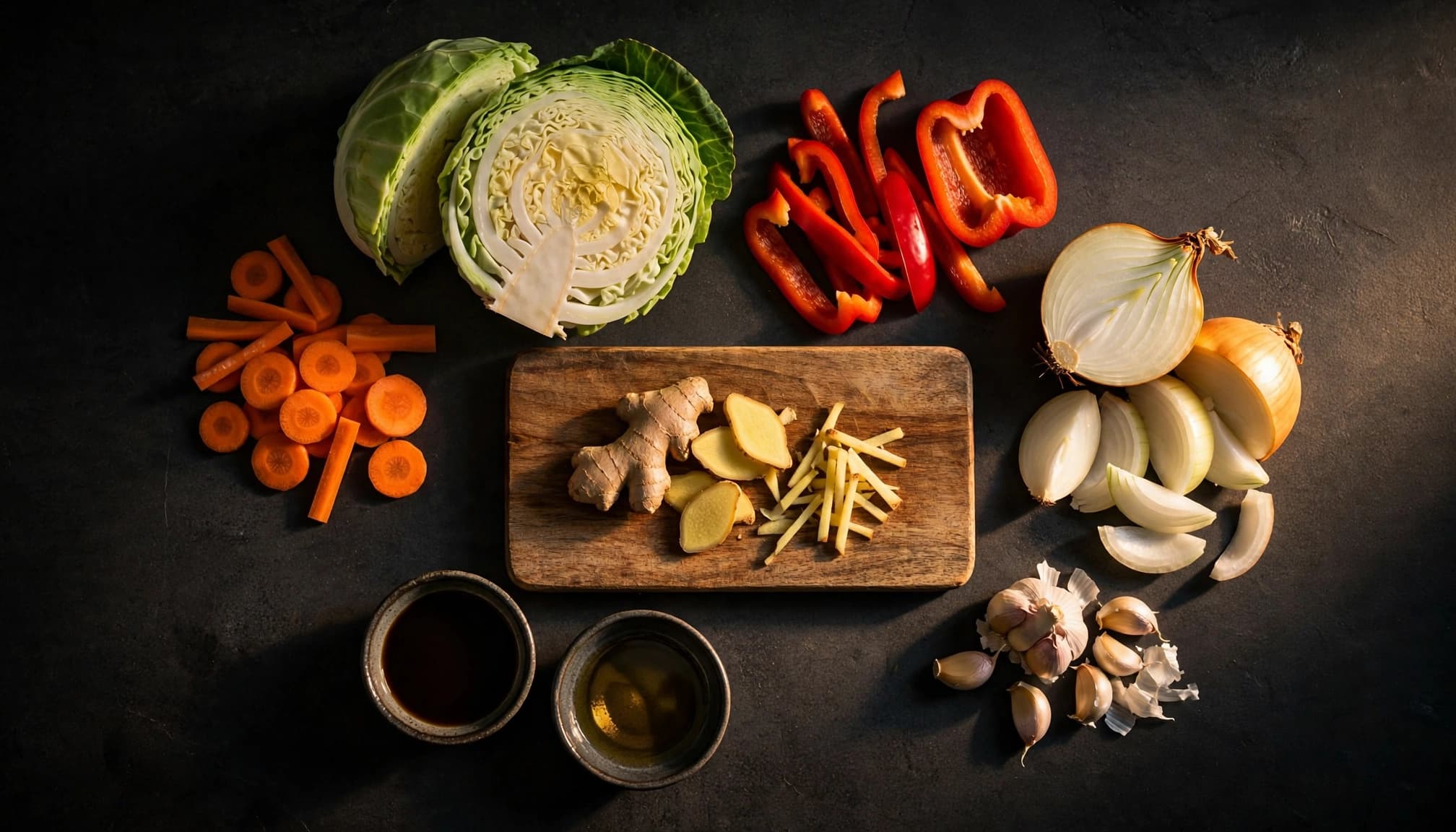
Choose a firm cabbage with tight, fresh-looking leaves and no slimy spots. Rinse the cabbage, carrot, bell pepper, and onion under cool running water, then dry them thoroughly with a clean towel or salad spinner.
Slice the cabbage into thin, even strips. Cut carrots small enough to soften quickly, and keep the pepper and onion slices close in size. Similar cuts cook at a similar rate, which keeps the finished dish balanced.
Water is the main enemy of a crisp stir-fry. Wet vegetables release steam, which softens cabbage before it can sear.
Mix the sauce and chop every vegetable before the oil hits the pan. Stir-frying moves fast, and stopping to slice garlic can leave the first vegetables overcooked.
Set Up for a Faster Weeknight Dinner
A little organization makes this cabbage stir-fry feel genuinely quick. Keep a large bowl nearby for the cabbage because it takes up more room before cooking than after.
Use a Wide Pan and High Heat
A wide skillet gives the vegetables enough contact with the hot surface. Heat the empty pan first, then add oil once the pan feels hot. The oil should look fluid and lightly shimmer, but it shouldn’t smoke heavily.
If your skillet is small, cook the cabbage in two batches. An overcrowded pan traps moisture, and the vegetables will steam instead of fry.
Keep the Sauce Ready, Not Pouring Early
Stir soy sauce, sesame oil, and rice vinegar together in a small bowl before cooking. Adding liquid too early cools the pan and makes the cabbage release water.
Wait until the vegetables are nearly done. Then toss the sauce through the pan quickly, giving it enough time to coat the vegetables without creating a puddle.
How to Make This Garlic Vegetable Stir-Fry Without Soggy Cabbage
Heat 1 to 2 tablespoons of neutral oil in a wok or wide skillet over high heat. Add minced garlic and, if using it, about 1 teaspoon of grated fresh ginger. Stir for about 30 seconds, only until fragrant. Garlic burns fast, so move on as soon as it smells toasty.
Add the onion, carrot, and bell pepper. Cook for 2 to 3 minutes, stirring every so often, until the onion starts to soften and the carrot looks brighter.
Add the cabbage in handfuls. Toss it with tongs or a spatula as it wilts, then cook for 2 to 5 minutes. The cabbage should soften at the edges while keeping a little bite in the center.
Pour in the sauce during the final minute. Toss until every strand is lightly coated, then take the pan off the heat. Serve immediately for the best texture.
A Simple Soy-Garlic Sauce With Easy Substitutions
For a dependable sauce, combine 2 tablespoons soy sauce or tamari, 1 teaspoon toasted sesame oil, and 1 teaspoon rice vinegar. This amount seasons the vegetables without drowning them.
Add 1 teaspoon oyster sauce or hoisin for a fuller savory taste. A small amount of maple syrup or sugar balances a sharp vinegar or salty sauce. For heat, use chili garlic sauce or a pinch of red pepper flakes.
Tamari or gluten-free soy sauce works well for a gluten-free version. Taste before adding salt, because soy sauce already brings plenty of sodium.
The Best Cooking Order for Crisp-Tender Vegetables
Hard vegetables need a head start. Carrots take longer than peppers, while cabbage cooks quickly once it meets the hot pan. Adding all the vegetables at once leaves carrots firm and cabbage limp.
Stir often enough to prevent scorching, but don’t constantly scrape the pan. Brief pauses help vegetables pick up light browning. Keep the pan uncovered for most of the cooking.
If you prefer softer cabbage, cover the skillet for one minute after adding it, then uncover and toss. Burned garlic means the heat was too high or it sat alone too long. Watery vegetables mean the pan was crowded or the produce went in wet. If cabbage remains too firm, keep tossing for another minute before adding more sauce.
Ways to Serve and Customize Cabbage Stir-Fry
The basic recipe is flexible enough for a side dish, a grain bowl, or a full dinner. White rice, brown rice, quinoa, noodles, and cauliflower rice all pair well with the savory garlic sauce.
Add Protein Without Slowing Things Down
For tofu, brown cubes first and set them aside before cooking the vegetables. Return them to the pan with the sauce. Scrambled egg also works well, especially when cooked first and folded in at the end.
Chicken, shrimp, and thinly sliced beef need their own quick sear before the vegetables. Cook the protein through, transfer it to a plate, then add it back after the cabbage wilts. This approach prevents crowded-pan cooking and keeps the vegetables crisp.
Finish With Fresh Contrast
A squeeze of lime brightens the salty sauce. Cilantro, sliced green onions, toasted sesame seeds, or crushed peanuts add freshness and crunch just before serving.
Broccoli, mushrooms, snow peas, bean sprouts, and bok choy are useful swaps. Add broccoli with the carrots, cook mushrooms after the onion, and toss bean sprouts in with the sauce because they need almost no time.
How to Store and Reheat Leftovers Safely
Cool leftovers promptly and transfer them to an airtight container. The USDA advises refrigerating cooked food within two hours, or within one hour when temperatures are above 90 degrees F, as explained in its food safety danger zone guidance.
Use this stir-fry within three days for the best quality and a cautious safety window. General USDA leftover storage guidance allows most cooked leftovers for three to four days when refrigerated properly, but cabbage softens quickly.
Reheat portions in a skillet over medium heat or briefly in the microwave. Add a small splash of water or soy sauce if the vegetables seem dry. Freezing isn’t ideal because thawed cabbage can become watery and soft.
Key Takeaways
Dry, evenly sliced vegetables make a major difference in this easy cabbage stir-fry with garlic and vegetables. High heat, a wide pan, and staged cooking help the carrot soften while the cabbage stays crisp-tender.
Keep the sauce light and add it near the end. Once the cabbage begins to wilt, the meal is only minutes away from the table.
Frequently Asked Questions
Can I make cabbage stir-fry without a wok?
Yes. A large, wide skillet works well because it gives vegetables room to cook over high heat. If the pan feels crowded after adding the cabbage, cook in batches rather than forcing everything into one pan.
How do I keep cabbage from becoming mushy?
Dry the cabbage well, use high heat, and add it after the firmer vegetables have started cooking. Also, avoid too much sauce and don’t cover the pan for more than a minute unless you want softer cabbage.
Can I use red cabbage instead of green cabbage?
Red cabbage works well and gives the dish a deeper purple color. It can take slightly longer to soften, so give it an extra minute if needed. Mixing red and green cabbage makes the stir-fry especially colorful.
What can I use instead of soy sauce?
Tamari, coconut aminos, and reduced-sodium soy sauce are all useful substitutes. Since their salt levels vary, start with a little less than the recipe calls for and adjust after tasting.
Is cabbage stir-fry good for meal prep?
It works for short-term meal prep and tastes best within about three days. Store cooked rice or noodles separately when possible, then reheat the vegetables briefly to protect their texture. The Mayo Clinic’s leftover storage advice also recommends using refrigerated leftovers within three to four days.
A Fast, Flexible Dinner Worth Repeating
Garlic cabbage stir-fry proves that a simple vegetable dinner doesn’t need a long ingredient list or much time. Keep the vegetables dry, slice them evenly, cook over high heat, and add cabbage last.
Adjust the sauce, vegetables, and protein to match what you have on hand. With a hot pan and a little attention to timing, you get a colorful meal with crisp-tender texture every time.
-

 Manchester United9 months ago
BREAKING NEWS: “I didn’t leave Manchester United because of Ruben Amorim. I left because of this particular player. The way he treated me in the dressing room was unacceptable. If I’m to return, then he has to leave.”
-
Manchester United9 months ago
BREAKING NEWS: “WE WERE TOO HARSH ON HIM” — SIR ALEX FERGUSON URGES MANCHESTER UNITED TO BRING BACK OLE GUNNAR SOLSKJÆR TO OLD TRAFFORD.
-

 Barcelona1 year ago
Breaking News: Anfield is buzzing with excitement! Raphinha has reached a personal agreement with Liverpool. Barcelona is reportedly willing to let him go, and in a recent interview, Raphinha hinted at his admiration for the incoming manager, saying, “If Arne Slot calls, you pick up.”
-

 Premier League1 year ago
Xavi Hernandez has officially signed a three-year contract to become the new head coach of a Premier League club, stepping in after the departure of the previous manager
-
 Real Madrid1 year ago
Jurgen Klopp Reveals Why He Accepted Real Madrid’s Offer to Replace Carlo Ancelotti
-
Liverpool1 year ago
Despite the heartbreak caused by Diogo Jota’s tragic accident, Liverpool FC has brought a glimmer of hope to his grieving family — especially his wife and the three beautiful kids he left behind
-

 Manchester United2 years ago
I’m not suppose to be doing this but as A captain it pains me to see such a great player with potential leave our club,I shed tears when the INEOS announced His departure,this very unfair of Him”, Bruno Fernandez broke down in tears as INEOS confirmed another Man united player departure by the summer
-
Manchester United1 year ago
BREAKING NEWS: Lisandro Martinez spotted in Man United training yesterday as Club doctor confirmed Him fit to start against Lyon – Congratulations Man United fans