
Dinner recipes
One-Pot Chicken and Rice Recipe for an Easy Family Dinner

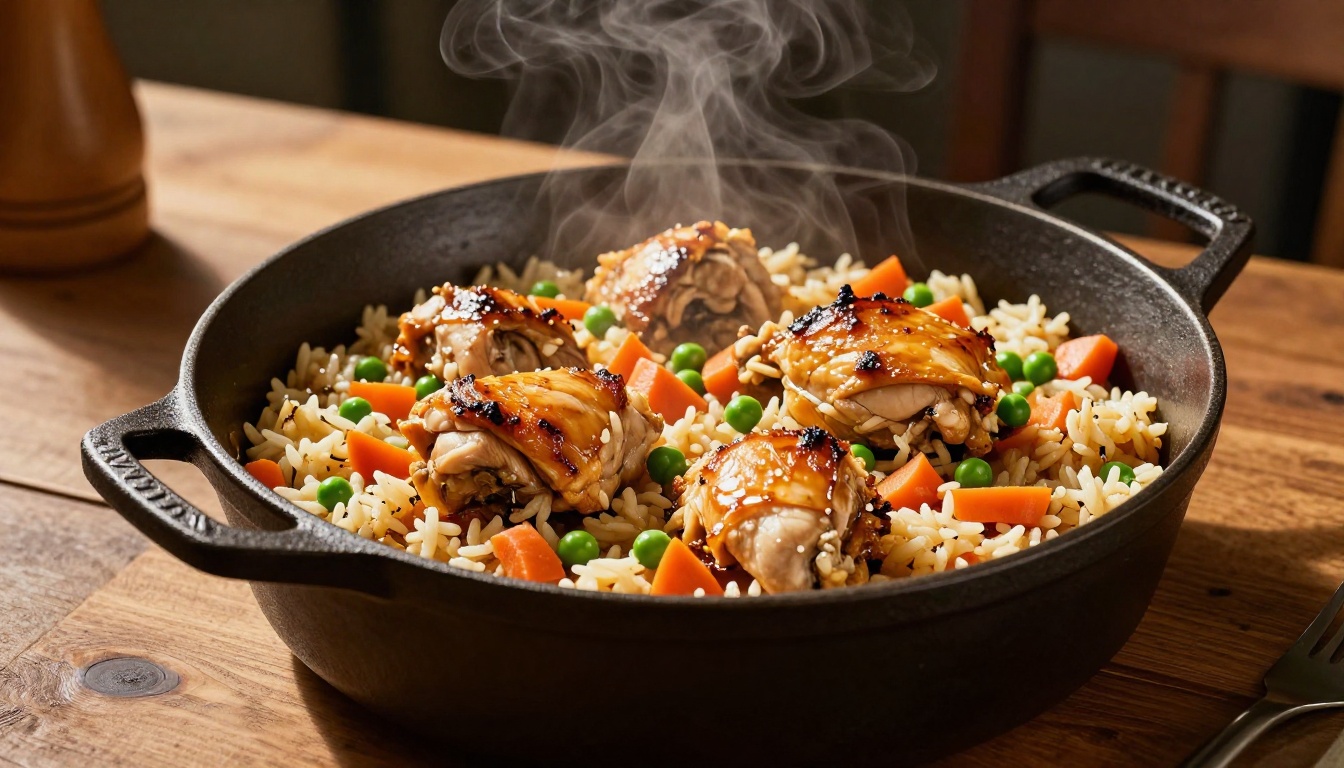
A warm dinner that cooks in one pot can rescue a weeknight when everyone is hungry and the sink is already full. This one-pot chicken and rice recipe brings tender chicken, seasoned rice, carrots, and peas together without extra pans or complicated prep.
Plan on about 45 minutes from start to finish. Boneless, skinless chicken thighs stay juicy, while a few small details, especially the right rice and a closed lid, keep the finished dish fluffy instead of soggy.
One-Pot Chicken and Rice Recipe for an Easy Family Dinner
This recipe makes 4 generous servings and takes about 45 minutes, including prep. Use a wide, heavy pot or Dutch oven with a tight-fitting lid so the rice cooks evenly.
| Ingredient | Amount |
|---|---|
| Boneless, skinless chicken thighs | 1 1/2 pounds |
| Long-grain white rice | 1 1/2 cups |
| Chicken broth | 3 cups |
| Yellow onion, finely chopped | 1 medium |
| Garlic, minced | 3 cloves |
| Carrots, diced small | 2 medium |
| Frozen peas | 1 cup |
| Olive oil or butter | 1 tablespoon |
| Paprika | 1 teaspoon |
| Dried thyme or Italian seasoning | 1 teaspoon |
| Salt | 1 teaspoon, divided |
| Black pepper | 1/2 teaspoon |
Long-grain white rice is the dependable choice here. Jasmine rice or basmati rice also fit this one-pot chicken and rice recipe. Avoid brown rice unless you are prepared to test a different liquid amount and cooking schedule.
One cup of uncooked rice usually produces about three cups of cooked rice, so 1 1/2 cups comfortably feeds a family of four. Chicken thighs bring more forgiveness to a one-pot meal because they remain moist during the covered cook. You can use chicken breast, but add it with more care and check it early with a thermometer.
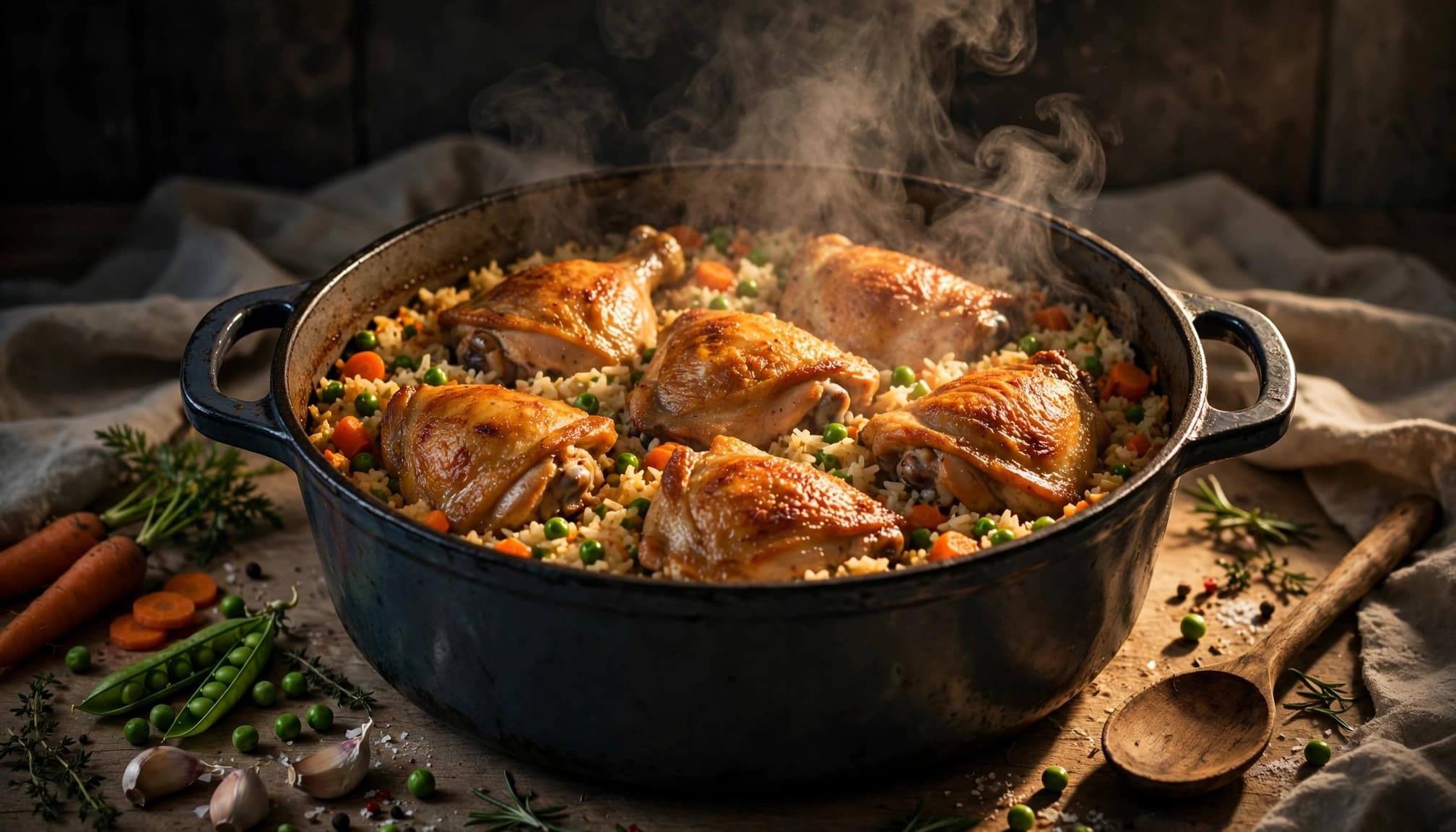
How to Make One-Pot Chicken and Rice on the Stovetop
Keep the workflow simple: brown the chicken, build flavor in the pot, then let the rice cook undisturbed. A heavy Dutch oven holds steady heat and prevents the thin spots that can scorch rice.
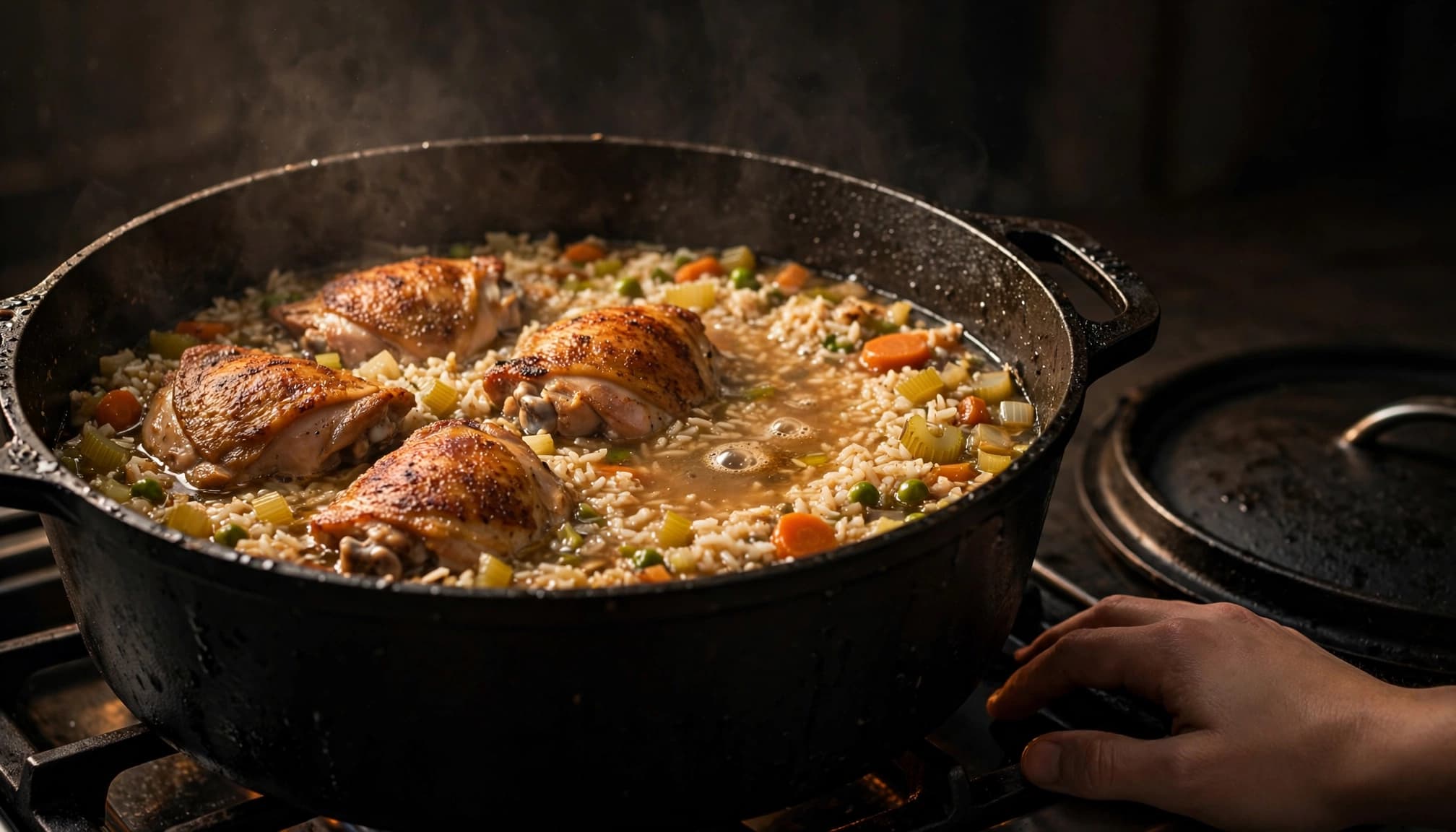
Season and brown the chicken
Pat the chicken thighs dry with paper towels. Season both sides with 1/2 teaspoon salt, pepper, paprika, and dried herbs.
Heat the oil or butter over medium-high heat. Place the thighs in a single layer and brown them for several minutes per side. They do not need to cook through at this stage.
Move the chicken to a clean plate once it has a deep golden surface. Those browned bits left in the pot will season the rice and broth.
Cook the vegetables and toast the rice
Lower the heat to medium. Add the onion and carrots, then cook until the onion softens and the carrots brighten, about 4 to 5 minutes.
Stir in the garlic for 30 seconds, until fragrant. Add the dry rice and stir it through the vegetables for about a minute. This brief step coats the grains in the seasoned fat and helps distribute flavor.
Scrape the bottom of the pot with a wooden spoon as you stir. If browned bits stay stuck, add a small splash of broth and loosen them before adding the rest.
Add broth, cover, and let the pot work
Pour in the chicken broth and the remaining 1/2 teaspoon salt. Stir once to level the rice, then return the browned chicken thighs to the pot, placing them on top of the rice.
Bring the broth to a gentle simmer. Once it bubbles lightly, cover the pot with its tight-fitting lid and lower the heat to low.
Cook until the rice is tender and most liquid has absorbed, about 20 to 25 minutes. Resist lifting the lid during this stage because escaping steam changes the conditions inside the pot.
A lid that fits poorly can leave rice dry around the edges and undercooked in the center, even when the broth amount is correct.
Rest, add peas, and check for doneness
Remove the pot from the heat and let it sit, covered, for 5 to 10 minutes. Then scatter in the frozen peas and gently fluff the rice with a fork.
The residual heat warms the peas without turning them dull or soft. Check the thickest part of a thigh with an instant-read thermometer before serving.
Chicken must reach 165°F for safe eating. Follow the FoodSafety.gov safe temperature guidelines rather than judging doneness by color alone.
Simple Ways to Customize This Family-Friendly Chicken and Rice
The basic formula welcomes small changes, especially when you need to use what is already in the refrigerator. Keep the rice, broth, and covered-cooking method consistent, then adjust the vegetables and seasoning.
Swap vegetables without overfilling the pot
Frozen peas are easy, but diced bell pepper, corn, chopped green beans, or small broccoli florets also work. Add firmer vegetables, such as carrots and green beans, with the onion.
Save tender ingredients for the end. Spinach wilts quickly after the rice rests, while chopped parsley or scallions add freshness just before serving. Avoid adding a large amount of watery vegetables, such as zucchini or fresh tomatoes, because they can affect the rice texture.
For a heartier meal, serve the chicken and rice with a crisp green salad, sliced cucumbers, or roasted asparagus. A spoonful of plain Greek yogurt with lemon works well alongside smoky paprika.
Change the flavor direction
Paprika and thyme create a mild, familiar flavor. For a brighter version, add lemon zest after cooking and use oregano. Cumin, chili powder, and a squeeze of lime move the dish toward a Southwest-style dinner.
A little grated Parmesan stirred into the finished rice gives it a richer feel. For heat, use crushed red pepper flakes or a small amount of cayenne rather than hot sauce, which adds extra liquid.
If the rice looks too wet after the resting period, leave the lid off for a few minutes and fluff gently. If it seems firm with liquid still in the pot, cover it again and let it sit off the heat before making changes.
Fix Common Chicken and Rice Problems
Most problems with one-pot meals come down to heat, trapped steam, or an ingredient that changes the liquid balance. Small corrections usually save the dinner.
When the rice is soggy or uneven
Soggy rice often comes from too much broth, frequent stirring, or opening the lid repeatedly. Use a measuring cup for both rice and liquid, then stir only before the lid goes on.
A heavy pot matters because it spreads heat more evenly. If your burner runs hot, move the pot to the smallest burner once the broth reaches a simmer. Low heat should maintain gentle steam, not an aggressive boil.
Long-grain rice also needs rinsing only if its package directs you to do so. If you rinse it, drain it thoroughly so extra water does not enter the pot.
When chicken feels dry or the bottom catches
Chicken breast dries out faster than thighs. If you use breast, choose evenly sized pieces and check the internal temperature early. Remove fully cooked pieces while the rice finishes, then return them to the pot for serving.
Rice can catch on the bottom when the heat stays too high after covering. Turn the burner down as soon as the liquid simmers, and do not use a lightweight pot for this recipe.
If you notice a toasted smell near the end, take the pot off the heat immediately. Do not scrape dark, burned rice into the rest of the dish.
Key Takeaways
- Use boneless, skinless chicken thighs for a forgiving, juicy result.
- Choose long-grain white rice, jasmine rice, or basmati rice for this method.
- Brown the chicken first, then cook the rice over low heat with the lid closed.
- Let the pot rest before fluffing the rice and adding peas.
- Confirm that the chicken reaches 165°F before it reaches the dinner table.
Frequently Asked Questions
Can I use chicken breast instead of chicken thighs?
Yes, boneless, skinless chicken breast can replace thighs. Cut large breasts into similarly sized pieces and use a thermometer to avoid overcooking. Remove cooked chicken if needed while the rice finishes resting.
Can I make this dish ahead of time?
You can cook it earlier in the day and refrigerate it in a covered container within two hours. Reheat portions until hot throughout, adding a splash of broth if the rice has dried out. Store leftovers separately from raw ingredients.
Should I rinse the rice first?
Follow the directions on your rice package. If you rinse it, drain it well before adding it to the pot. Extra water clinging to the grains can throw off the broth balance.
Can I freeze one-pot chicken and rice?
Yes, freeze cooled portions in airtight containers for an easy future meal. Rice may soften a little after thawing, so reheat it with a small splash of broth and fluff it gently.
Where should I check the chicken temperature?
Insert an instant-read thermometer into the thickest part of the chicken without touching the pot. The USDA’s chicken safety guidance identifies 165°F as the safe minimum internal temperature for poultry.
A Reliable Weeknight Dinner Starts With One Pot
This chicken and rice dinner earns its place in a busy family rotation because the ingredients are affordable, the method is easy to repeat, and cleanup stays manageable. Browning the chicken, measuring the broth carefully, and keeping the lid closed give the rice its best chance to cook evenly.
Before serving, confirm the chicken reaches 165°F with a thermometer, as shown in the USDA’s safe minimum internal temperature chart. Then try your favorite vegetables or seasonings while keeping the basic method the same.
-

 Manchester United9 months ago
BREAKING NEWS: “I didn’t leave Manchester United because of Ruben Amorim. I left because of this particular player. The way he treated me in the dressing room was unacceptable. If I’m to return, then he has to leave.”
-
Manchester United9 months ago
BREAKING NEWS: “WE WERE TOO HARSH ON HIM” — SIR ALEX FERGUSON URGES MANCHESTER UNITED TO BRING BACK OLE GUNNAR SOLSKJÆR TO OLD TRAFFORD.
-

 Barcelona1 year ago
Breaking News: Anfield is buzzing with excitement! Raphinha has reached a personal agreement with Liverpool. Barcelona is reportedly willing to let him go, and in a recent interview, Raphinha hinted at his admiration for the incoming manager, saying, “If Arne Slot calls, you pick up.”
-

 Premier League1 year ago
Xavi Hernandez has officially signed a three-year contract to become the new head coach of a Premier League club, stepping in after the departure of the previous manager
-
 Real Madrid1 year ago
Jurgen Klopp Reveals Why He Accepted Real Madrid’s Offer to Replace Carlo Ancelotti
-
Liverpool1 year ago
Despite the heartbreak caused by Diogo Jota’s tragic accident, Liverpool FC has brought a glimmer of hope to his grieving family — especially his wife and the three beautiful kids he left behind
-

 Manchester United1 year ago
I’m not suppose to be doing this but as A captain it pains me to see such a great player with potential leave our club,I shed tears when the INEOS announced His departure,this very unfair of Him”, Bruno Fernandez broke down in tears as INEOS confirmed another Man united player departure by the summer
-
Manchester United1 year ago
BREAKING NEWS: Lisandro Martinez spotted in Man United training yesterday as Club doctor confirmed Him fit to start against Lyon – Congratulations Man United fans