
Dinner recipes
Crispy Roasted Potatoes Recipe With Garlic and Herbs

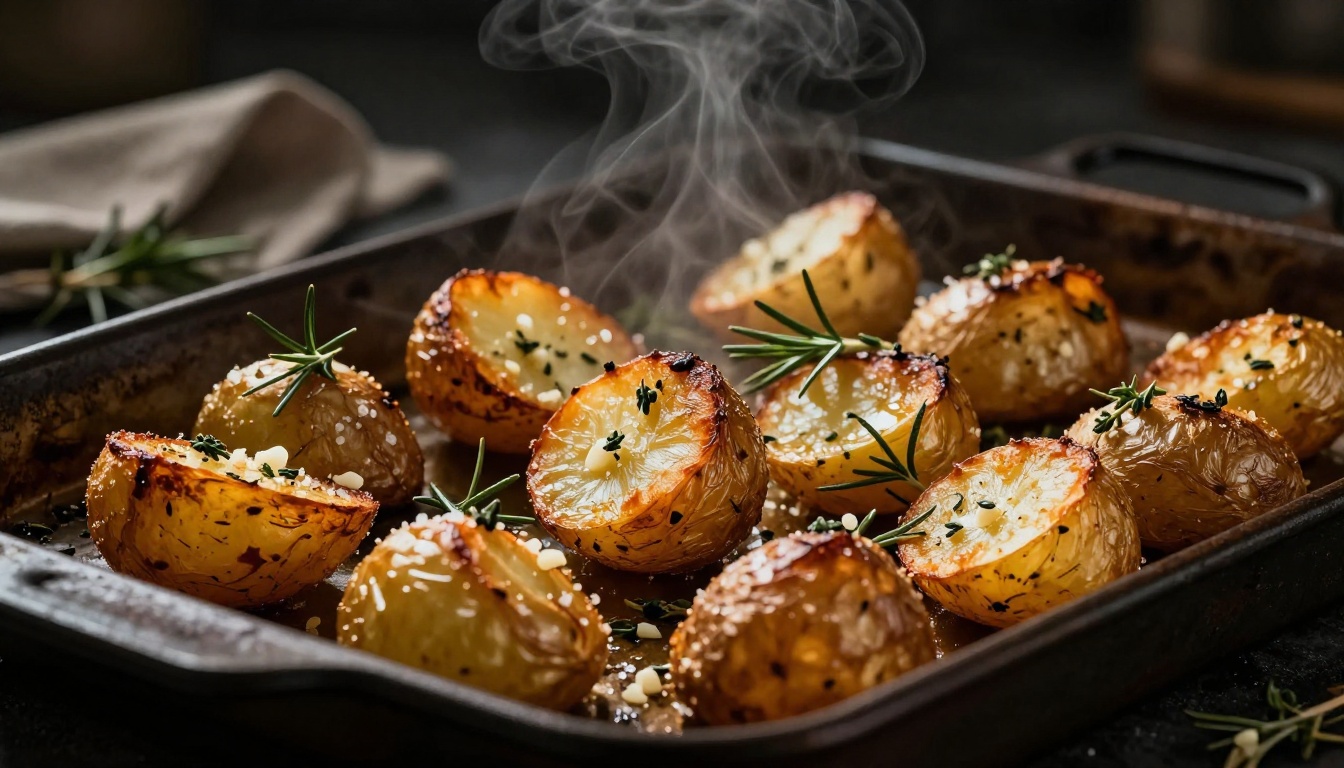
Golden, crackly potato edges and soft, fluffy centers make a side dish people reach for before the main course. This crispy roasted potatoes recipe with garlic and herbs uses a short parboil, roughened surfaces, and high heat to produce reliable crunch without fussy steps.
Garlic goes in late, so it turns fragrant instead of bitter. The result works on a busy Tuesday, yet looks right at home beside a holiday roast.
Key Takeaways
- Parboil the potatoes until their outsides feel tender but their centers still resist a knife slightly.
- Let the drained pieces steam-dry, then shake them hard enough to create rough, starchy ridges.
- Start with a preheated sheet pan and leave room between every piece for deep browning.
- Add fresh garlic and herbs near the end, then serve while the potatoes are hot and crisp.
Crispy Roasted Potatoes Recipe With Garlic and Herbs
This recipe makes 4 to 6 side-dish servings. Plan for 15 minutes of prep, 40 to 50 minutes of roasting, and about 1 hour total.
Serve these potatoes with roast chicken, steak, sausages, fish, or a simple green salad. Yukon Golds create a creamy interior, while flourier potatoes often form even crisper edges. As the USDA’s potato basics explain, potatoes can be starchy or waxy, so the variety affects the final texture.
The Ingredients That Build Better Flavor and Texture
For 2 pounds of potatoes, gather:
- 2 pounds Yukon Gold, baby yellow, or other starchy potatoes
- 3 tablespoons olive oil
- 1 1/2 teaspoons kosher salt, plus more for the boiling water
- 1/2 teaspoon black pepper
- 3 fresh garlic cloves, finely minced or grated
- 2 tablespoons chopped fresh parsley, thyme, rosemary, or a mix
- Optional smoked paprika, unsalted butter, or a small pinch of baking soda
Cut the potatoes into even 1 1/2 to 2-inch pieces. Olive oil promotes browning, while salt in both the water and final seasoning layers flavor into the potatoes. Fresh herbs bring a clean finish that dried herbs can’t fully match.
A small pinch of baking soda in the boiling water can make the exterior softer and rougher. Smoked paprika adds warm color, while a spoonful of butter makes the final coating richer. For another savory variation, Project Bread’s garlic Parmesan potato recipe pairs the same familiar flavors with cheese.
How to Roast Potatoes That Stay Crisp
Heat the oven to 425°F. Use 450°F if your oven runs gently and you want darker edges. Place a sturdy metal sheet pan in the oven as it heats.
Bring a large pot of generously salted water to a boil. Add the potatoes and cook for 8 to 10 minutes, until the outer layer is tender but the centers aren’t cooked through. Drain them well, then leave them in the colander for 3 to 5 minutes so steam can escape.
Return the potatoes to the empty pot or a large bowl. Toss and shake them until their edges look fuzzy and broken. Coat them with olive oil, salt, pepper, and optional paprika.
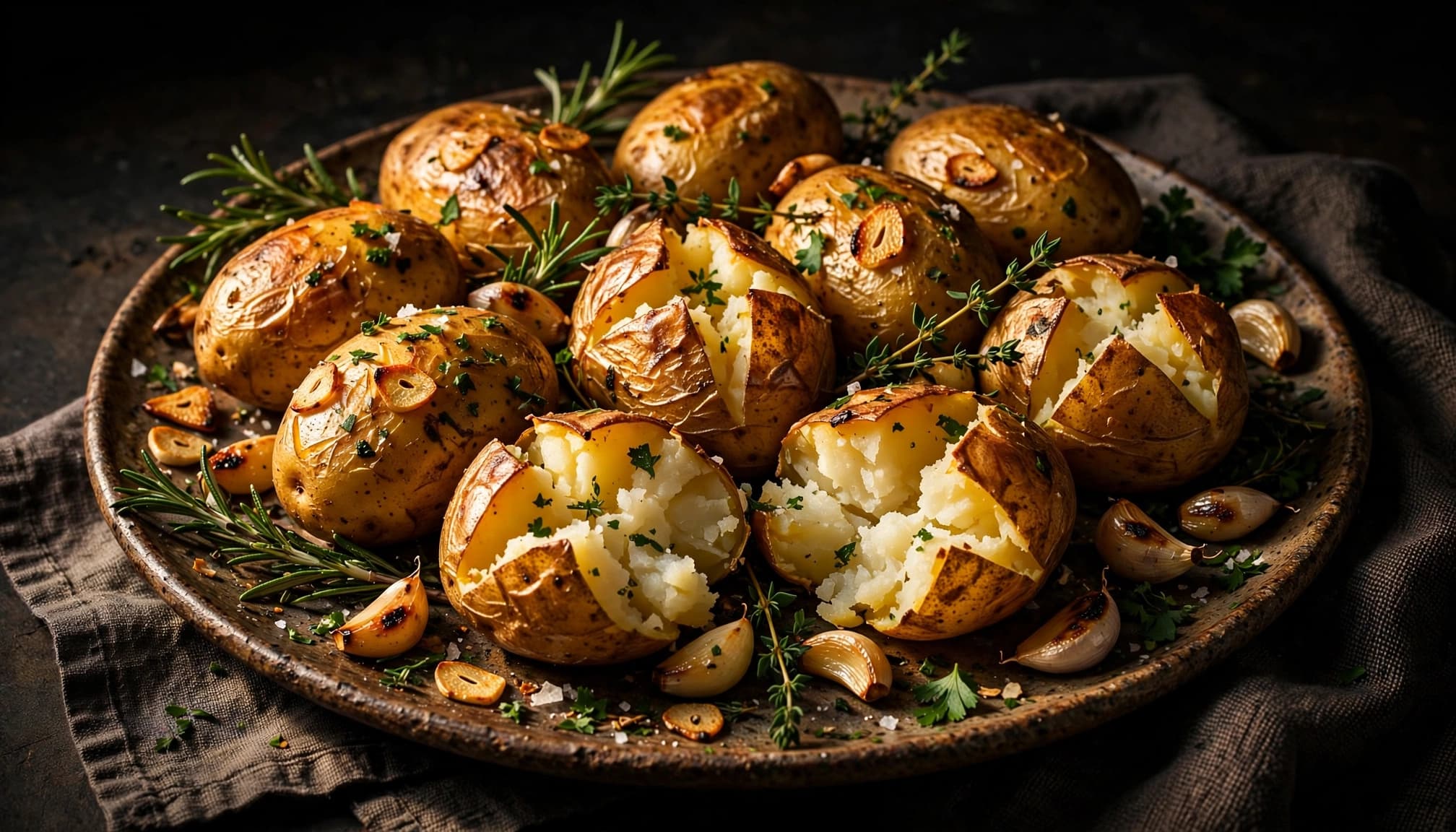
Carefully spread the potatoes on the hot sheet pan in one layer. Roast for 20 minutes, turn each piece, then roast for another 20 to 30 minutes until deeply golden.
When to Add the Garlic and Fresh Herbs
Raw garlic can burn long before potatoes finish roasting. Add minced garlic during the last 5 to 10 minutes, tossing it with the potatoes quickly before returning the pan to the oven.
You can also melt a little butter with garlic and toss it through the potatoes after roasting. Finish with chopped parsley, thyme, or rosemary while the potatoes are hot. Taste for salt, add black pepper, and bring them to the table immediately.
The Simple Technique Behind Extra-Crispy Oven-Roasted Potatoes
The best texture comes from building a soft interior and a rough exterior before the potatoes hit the oven. This crispy roasted potatoes recipe with garlic and herbs depends on four details: the right variety, a brief parboil, rough edges, and enough pan space.
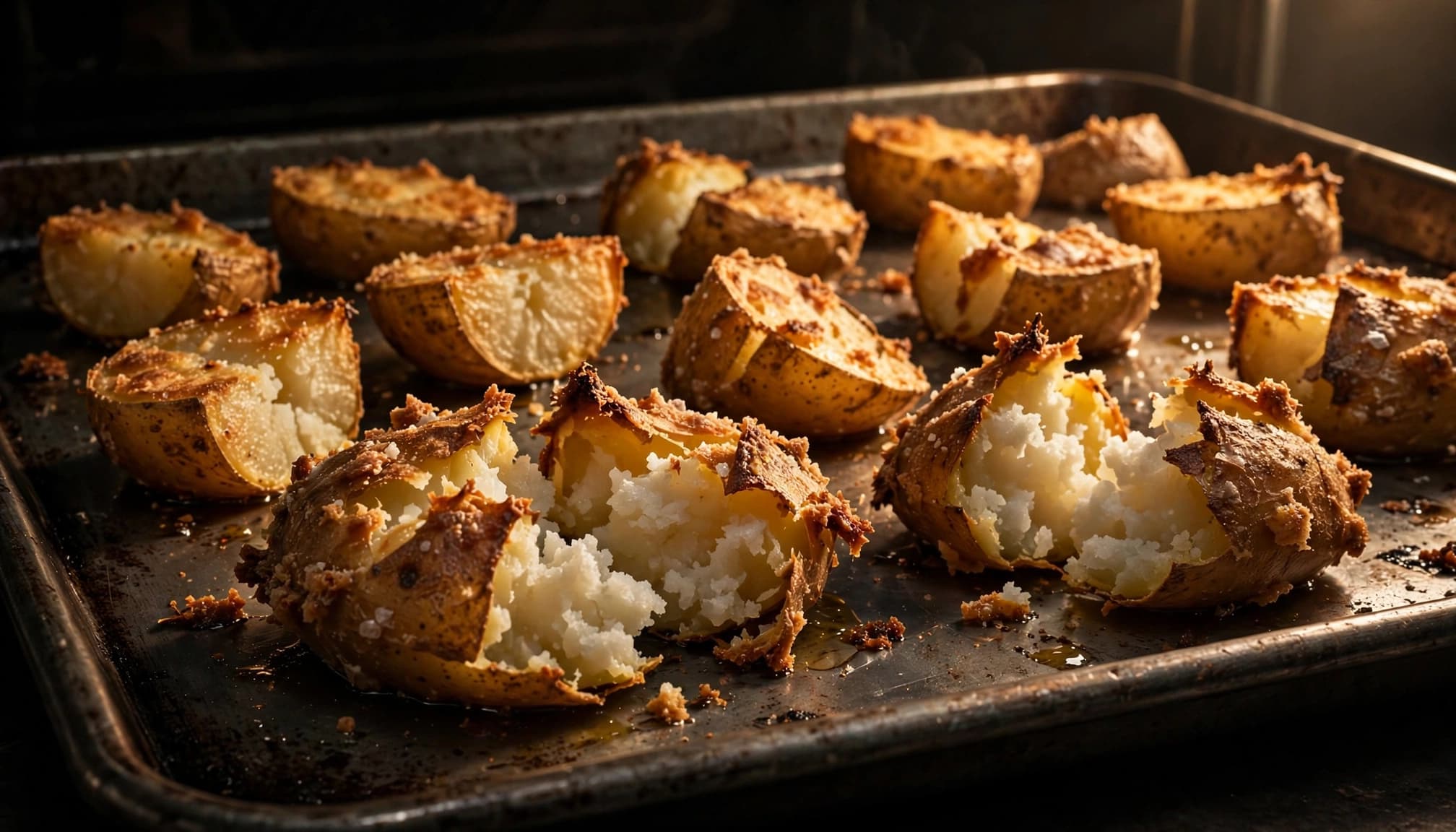
Parboiling softens the inside first. It also creates a starchy outer layer that clings to the potato after draining. Once you shake the pieces, that layer becomes tiny ridges and flakes. Those uneven points brown faster than smooth-cut surfaces.
A hot pan gives the first side immediate contact with heat. Meanwhile, open space lets moisture escape. Potatoes piled close together release steam, which leaves the exterior pale and soft instead of crisp.
Why Parboiling Works Better Than Soaking for This Recipe
Soaking potatoes can rinse off some surface starch, which suits certain preparations. For these roasted potatoes, a short parboil does more useful work because it starts cooking the center and makes the outside easy to rough up.
Test a piece with a small knife before draining. The blade should meet slight resistance in the middle, and the potato should hold its shape. If it falls apart, it has cooked too long.
Baking soda is optional. Use only a small pinch in the water, because too much can make the outer layer unpleasantly soft or pasty. A crisp crust needs roughness, not mush.
How Pan Space and Heat Prevent Soggy Potatoes
Use a large metal sheet pan and keep every potato in one uncrowded layer. A little space around each piece lets hot air circulate and moisture evaporate.
If 2 pounds of potatoes fill the pan edge to edge, split them between two pans. Rotate the pans halfway through roasting if they’re on separate oven racks.
Use 425°F in a standard oven. In a convection oven, start around 400°F because circulating air browns food faster. Watch closely during the final 10 minutes, since the rough edges can go from golden to too dark quickly. For another herb-focused approach, see these oven-roasted potato ideas.
Steam is the enemy of crisp potatoes. Dry surfaces and open pan space matter as much as oven temperature.
Common Mistakes That Keep Roasted Potatoes From Getting Crispy
Waxy potatoes can roast well, but they won’t provide the fluffy center many people want. Choose Yukon Golds or a more starchy option when texture is the priority.
Uneven cuts create a mixed batch, with small pieces overcooking while large ones stay firm. Keep pieces close to the same size. Skipping the parboil or failing to steam-dry also leaves the exterior smooth and damp.
Too little oil leads to pale patches. A cold pan delays browning. Crowding traps steam, and a low oven temperature dries potatoes before it browns them. Finally, garlic added at the start often turns dark and bitter before the potatoes become crisp.
For a flavor variation after you’ve mastered the basics, CraftBeering’s garlic herb potato recipe offers another familiar take on the combination.
How to Make the Recipe Ahead and Reheat It
Parboil, drain, and rough up the potatoes a few hours ahead. Let them cool, cover, and refrigerate them until it’s time to coat them with oil and roast.
Leftovers keep in a sealed container for 3 to 4 days. Refrigerate cooked potatoes within 2 hours, or within 1 hour if the room temperature is above 90°F. Keep the refrigerator at 40°F or below.
Reheat potatoes in a 425°F oven, air fryer, or hot skillet. Avoid the microwave if you want a crisp crust. Heat leftovers to 165°F, then refresh them with salt and chopped herbs.
What to Serve With Garlic Herb Roasted Potatoes
These potatoes fit almost any protein-centered meal. Pair them with roast chicken, grilled steak, baked salmon, sausages, or burgers. Their crisp, salty edges also work beside simple green beans, asparagus, or a sharp arugula salad.
For breakfast, add fried eggs and sautéed greens. At dinner, make a fast plate with shredded chicken and salad. A richer steakhouse-style menu also suits herb-roasted potato pairings, especially when you finish the potatoes with butter and rosemary.
Frequently Asked Questions
Can I use russet potatoes instead of Yukon Gold?
Yes. Russets are starchier, so they can create pronounced crisp edges after parboiling and shaking. However, cut them carefully because their softer texture makes them more likely to break apart if overboiled.
Should I peel the potatoes?
Peeling is optional. Thin-skinned Yukon Gold and baby yellow potatoes roast well with their skins on, which adds color and texture. Scrub them thoroughly and remove any damaged or green areas before cutting.
Can I use dried herbs?
Dried thyme or rosemary can work when added with the oil before roasting. Use less than fresh herbs because their flavor is more concentrated. Still, add fresh parsley after roasting when possible, since it brings a brighter finish.
Why are my potatoes crisp at first but soft later?
Steam softens the crust quickly after roasting. Don’t cover the pan or transfer hot potatoes into a deep bowl. Serve them on a warm platter with room around the pieces, and wait to add sauces until the table.
Can I freeze roasted potatoes?
You can freeze them, although they won’t be quite as crisp after reheating. Cool them completely, freeze in a single layer first, then transfer to a freezer-safe container. Reheat straight from frozen in a hot oven or air fryer.
Serve Them Hot and Golden
Great roasted potatoes come down to a few repeatable habits. Parboil them briefly, dry them well, rough up the edges, and roast them on a hot, uncrowded pan.
Add garlic and herbs late so their flavor stays fresh instead of scorched. Serve the potatoes while the crust is still crackly, then adjust the herbs and seasonings to match the rest of your meal.
-

 Manchester United9 months ago
BREAKING NEWS: “I didn’t leave Manchester United because of Ruben Amorim. I left because of this particular player. The way he treated me in the dressing room was unacceptable. If I’m to return, then he has to leave.”
-
Manchester United9 months ago
BREAKING NEWS: “WE WERE TOO HARSH ON HIM” — SIR ALEX FERGUSON URGES MANCHESTER UNITED TO BRING BACK OLE GUNNAR SOLSKJÆR TO OLD TRAFFORD.
-

 Barcelona1 year ago
Breaking News: Anfield is buzzing with excitement! Raphinha has reached a personal agreement with Liverpool. Barcelona is reportedly willing to let him go, and in a recent interview, Raphinha hinted at his admiration for the incoming manager, saying, “If Arne Slot calls, you pick up.”
-

 Premier League1 year ago
Xavi Hernandez has officially signed a three-year contract to become the new head coach of a Premier League club, stepping in after the departure of the previous manager
-
 Real Madrid1 year ago
Jurgen Klopp Reveals Why He Accepted Real Madrid’s Offer to Replace Carlo Ancelotti
-
Liverpool1 year ago
Despite the heartbreak caused by Diogo Jota’s tragic accident, Liverpool FC has brought a glimmer of hope to his grieving family — especially his wife and the three beautiful kids he left behind
-

 Manchester United1 year ago
I’m not suppose to be doing this but as A captain it pains me to see such a great player with potential leave our club,I shed tears when the INEOS announced His departure,this very unfair of Him”, Bruno Fernandez broke down in tears as INEOS confirmed another Man united player departure by the summer
-
Manchester United1 year ago
BREAKING NEWS: Lisandro Martinez spotted in Man United training yesterday as Club doctor confirmed Him fit to start against Lyon – Congratulations Man United fans