
Dinner recipes
Easy Sautéed Bok Choy With Garlic and Sesame

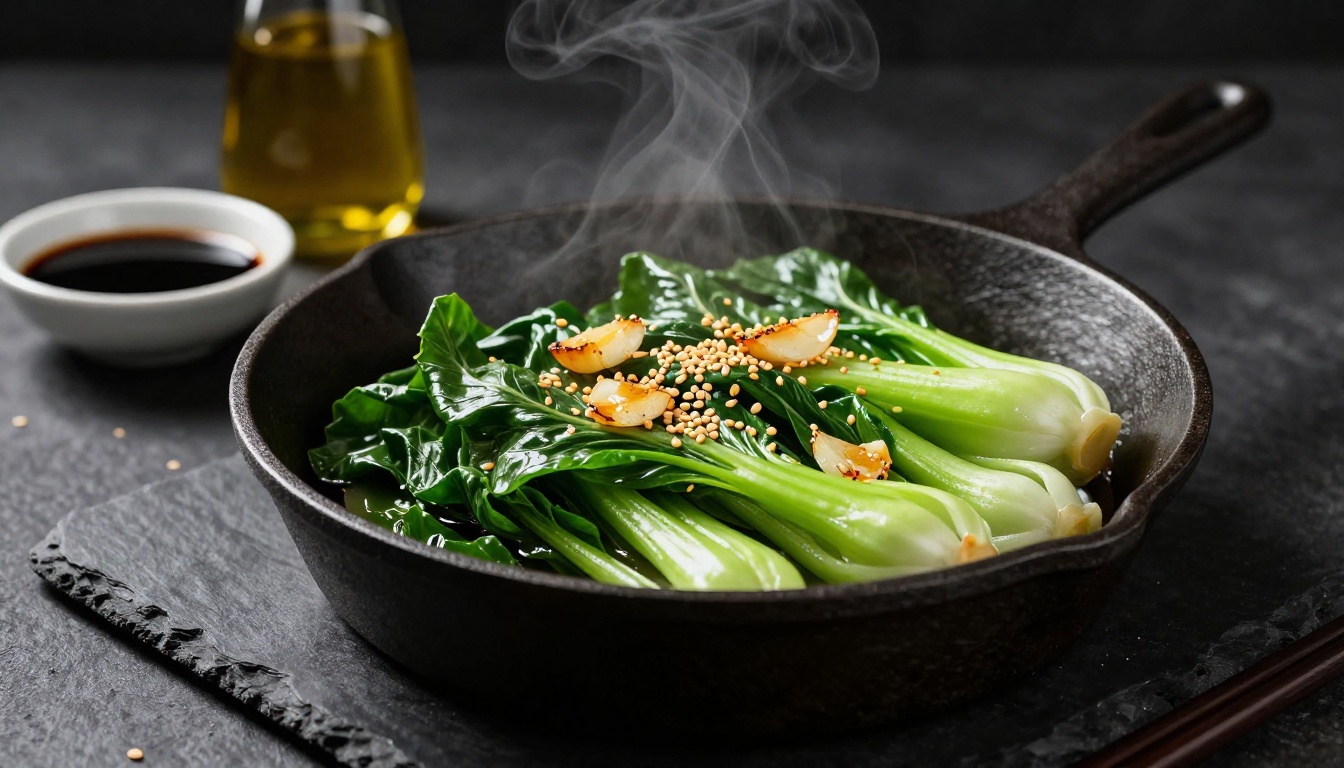
Fresh bok choy can go from refrigerator drawer to a vibrant weeknight side dish in about 15 minutes. This easy sautéed bok choy with garlic and sesame recipe uses a few pantry staples, yet it brings plenty of savory, nutty flavor to the plate.
Garlic, soy sauce, toasted sesame seeds, and a final drizzle of sesame oil make the mild greens taste complete without a long ingredient list. The method is beginner-friendly, and the goal is simple: tender-crisp white stems, wilted bright green leaves, and no puddle of water left in the pan.
Serve it with rice, noodles, chicken, fish, shrimp, or tofu when dinner needs a fast vegetable side.
Key Takeaways
- Cook the firm bok choy stems before adding the delicate leaves.
- Use neutral oil for high-heat sautéing, then add sesame oil after cooking for its toasted flavor.
- Dry bok choy well after washing so it browns instead of steaming in excess moisture.
- A brief covered finish softens thicker stems while keeping the leaves bright.
- Adjust the sauce with ginger, vinegar, chili crisp, or hoisin to suit the rest of your meal.
Easy Sautéed Bok Choy With Garlic and Sesame
This recipe makes about four side-dish servings. Baby bok choy is quick and tender, while regular bok choy has larger stems that need a little more attention. Either works well when cut to a similar size.
Gather these ingredients:
- 1 1/2 pounds baby bok choy, or 2 large heads regular bok choy
- 1 tablespoon neutral oil, such as avocado, canola, or grapeseed oil
- 4 garlic cloves, thinly sliced or minced
- 1 tablespoon soy sauce
- 1 teaspoon toasted sesame oil
- 1 tablespoon toasted sesame seeds
- Black pepper or red pepper flakes, to taste
- 2 tablespoons water, only if needed
Neutral oil handles the heat without competing with the vegetable. Garlic brings sharpness, while soy sauce adds salt and depth. Save toasted sesame oil for the finish because its flavor is strongest when it doesn’t spend long over high heat.
How to wash and cut bok choy for even cooking
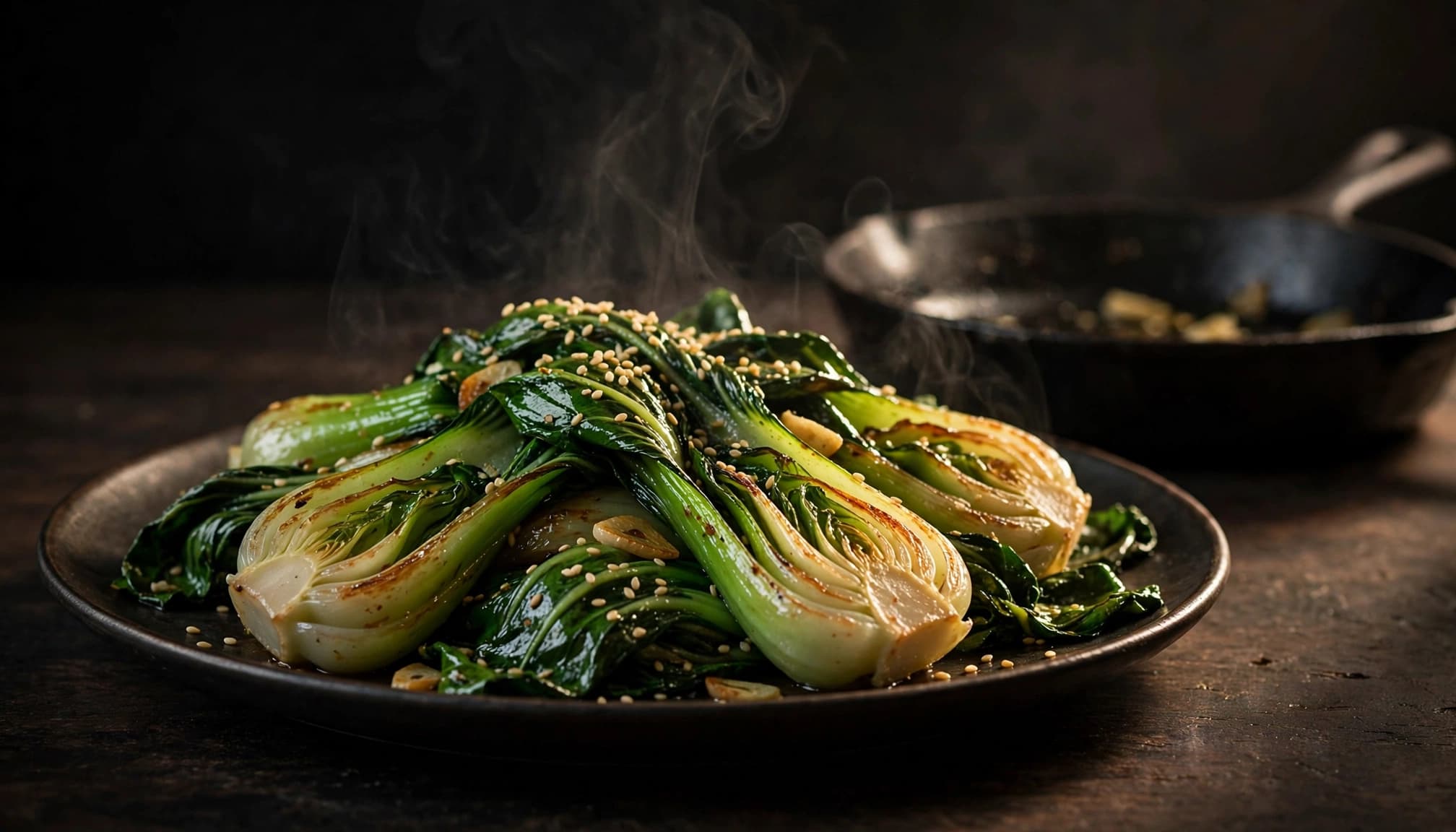
Bok choy often holds grit near its base and between tightly packed stalks. Trim a thin slice from the bottom, separate the leaves slightly, and rinse thoroughly under cold water.
Dry it well with a clean kitchen towel or salad spinner. Surface water lowers the pan temperature, so the bok choy can turn soft before it has a chance to brown.
Halve baby bok choy lengthwise through the core. For regular bok choy, cut the white stems into bite-size pieces and keep the leafy greens separate. The stems need a head start in the skillet.
The simple stovetop method, from garlic to sesame finish
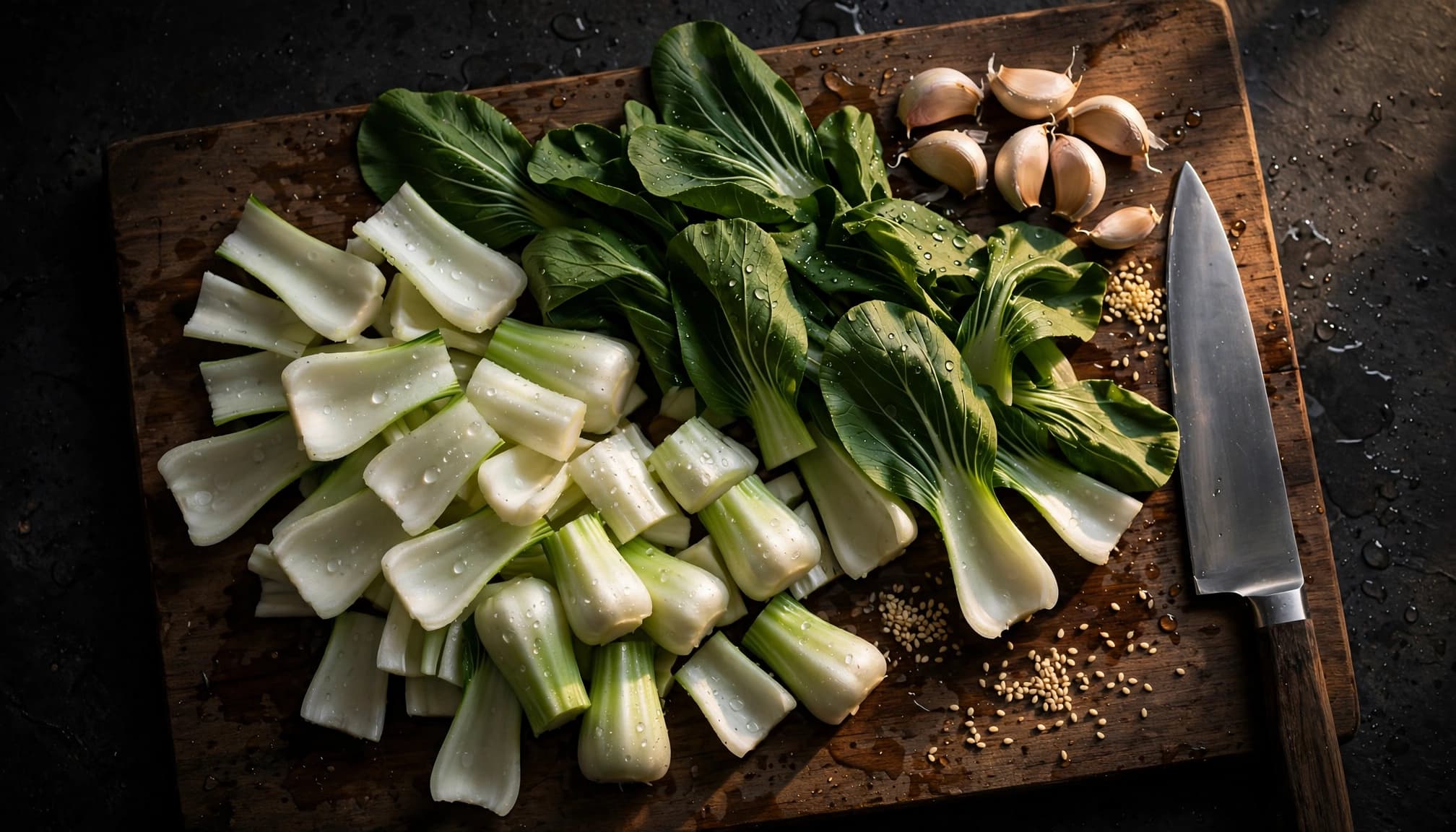
Set a large skillet or wok over medium-high heat. Add the neutral oil, then cook the garlic for 30 seconds to 1 minute, stirring constantly. It should smell fragrant and look pale gold, never dark brown.
Add the bok choy stems or the cut sides of halved baby bok choy. Sauté for 1 to 4 minutes, turning as the edges begin to brown. Next, add the leaves, soy sauce, and black pepper or red pepper flakes.
If the pan looks dry before the stems soften, add up to 2 tablespoons of water. Cover for 1 to 5 minutes, depending on the size of the bok choy. Remove the lid when the stems yield easily to a fork and the leaves have wilted.
Turn off the heat, then drizzle over the sesame oil and scatter on sesame seeds. This sautéed bok choy with garlic and sesame is best served right away, while the stems still have some bite.
How to Get Tender Stems and Bright Green Leaves
The biggest difference between crisp, fresh-tasting bok choy and limp bok choy comes down to timing. The white stems are dense and juicy, while the leaves cook in a fraction of the time.
Give the stems direct contact with the hot pan first. After they take on a little color, the leaves can join them for a much shorter cook. A quick covered finish traps steam in the skillet and softens the center of thicker stalks.
The pan should look almost dry when you serve bok choy. Excess liquid means the vegetable steamed too long or went into the skillet too wet.
Should you sauté, steam, or blanch bok choy first?
Direct sautéing is the fastest route and gives bok choy the most toasted flavor. The browned cut sides also add contrast to the clean, mild taste of the greens.
Steaming produces softer bok choy but doesn’t build the same savory flavor. A covered skillet gives you a useful middle ground because it sautés first, then briefly steams the stems in the same pan.
Blanching works well for large bok choy or a big batch. Drop it into boiling water for 30 to 40 seconds, drain it thoroughly, then finish it quickly with garlic, soy sauce, and sesame oil. For a different flavor direction, this ginger bok choy preparation shows how fresh ginger can take the lead.
Fix common texture and flavor problems
Undercooked stems need more covered cooking, usually one or two extra minutes with a splash of water. Check a thick piece with a fork instead of relying only on the clock.
Soggy bok choy usually comes from a crowded pan, wet leaves, or too much added water. Cook in batches if your skillet is small, and uncover the pan for the final minute if liquid remains.
A bitter edge can come from older bok choy or garlic that cooked too dark. Use fresh garlic, keep it moving, and add it after the oil heats. If the garlic burns, wipe out the pan and start again because the bitterness will spread through the dish.
Easy Ways to Customize This Garlic Sesame Bok Choy
This base recipe is flexible, so you can match it to the main dish without losing its quick, one-pan appeal. Add flavor in small amounts because bok choy has a delicate taste.
Add heat, brightness, or a fuller sauce
Sauté 1 teaspoon of finely grated fresh ginger with the garlic for a warmer, sharper flavor. A teaspoon of rice vinegar added at the end gives the dish brightness, especially alongside rich pork or salmon.
Red pepper flakes bring dry, steady heat. Chili crisp adds heat plus crunchy, savory bits, though it can make the dish saltier. Sliced green onions or thin shallots add a sweeter onion flavor.
For a slightly sweeter finish, stir in 1/2 teaspoon sugar with the soy sauce. If you want bok choy coated in sauce, combine 1 tablespoon soy sauce, 1 tablespoon hoisin, and 2 tablespoons water. Add a slurry made with 1 teaspoon cornstarch and 1 tablespoon cold water, then simmer briefly until glossy.
Use tamari instead of soy sauce for a gluten-free version. For a lighter dish, reduce the oil slightly and skip any sweetener.
What to serve with sautéed bok choy
Garlic sesame bok choy works best beside fuller-flavored mains because its clean taste cuts through richer sauces and grilled meats. Spoon it over steamed white rice or brown rice for an easy meal, or add it to fried rice, ramen, or soba noodles.
It also pairs well with grilled chicken, salmon, shrimp, pork, tofu, and tempeh. For a quick bowl, layer warm rice, sautéed bok choy, and your preferred protein. Finish with extra sesame seeds and a little chili crisp if you want heat.
The same stem-first technique also works well beside other fast dinners, including easy chicken dinner ideas, when you need a reliable vegetable without extra prep.
Make-Ahead, Storage, and Nutrition Notes
Wash, cut, and dry bok choy up to a day ahead. Store it in an airtight container or reusable bag lined with a dry paper towel in the refrigerator. Keep the stems and leaves together if using baby bok choy, or separate them if you cut regular bok choy into pieces.
Refrigerate cooked leftovers promptly in an airtight container and use them within three days. The broader FoodSafety.gov cold-storage guidance lists three to four days for refrigerated leftovers kept at 40 F or below.
Bok choy is low in calories and provides vitamin C, folate, calcium, potassium, and fiber. The finished dish’s nutrition depends on the amount of oil, soy sauce, sesame seeds, and optional sweeteners. Use reduced-sodium soy sauce, or simply use less, if you’re watching sodium intake.
Reheating without losing the texture
A skillet gives leftovers the best chance of staying crisp-tender. Warm a small amount of neutral oil over medium heat, add the bok choy, and cook only until heated through.
The microwave is convenient, but use short bursts and avoid covering it for too long. Prolonged reheating softens the leaves and releases more moisture.
Common mistakes that make bok choy watery or bland
- Skipping the wash leaves sand between the stalks, so rinse near the base and between leaves.
- Failing to dry the bok choy creates steam, so pat it dry before it reaches the skillet.
- Overcrowding the pan prevents browning, so cook in two batches when necessary.
- Adding stems and leaves together overcooks the leaves, so give the stems a head start.
- Pouring in too much water dilutes the sauce, so use only a small splash when the stems need help.
- Burning garlic makes the whole dish bitter, so stir it constantly and add bok choy quickly.
- Adding sesame oil early dulls its aroma, so drizzle it on after the heat is off.
Frequently Asked Questions
Can I use regular bok choy instead of baby bok choy?
Yes. Regular bok choy has thicker stems, so slice them into smaller pieces and cook them before the leaves. You may need an extra minute or two under the lid.
Can I make this recipe without sesame oil?
You can, although the final dish will have less nutty aroma. Use a little extra toasted sesame seed, or finish with a small spoonful of tahini thinned with warm water if you want a similar sesame note.
Do I need a wok for sautéed bok choy?
No. A wide skillet works well because it gives the stems space to meet the hot surface. Cast iron, stainless steel, and a large nonstick skillet all work.
Can I use frozen bok choy?
Fresh bok choy gives the best tender-crisp texture. Frozen bok choy releases more water, so thaw and drain it well, then cook it over high heat in small batches.
A Fast Side Dish Worth Repeating
Easy sautéed bok choy with garlic and sesame proves that a weeknight vegetable doesn’t need a complicated sauce or long cooking time. A hot pan, fresh garlic, soy sauce, and a final touch of sesame oil bring out its best qualities.
Adjust the heat, sauce, and toppings to fit the rest of dinner. However you serve it, keep the stems in the skillet first and stop cooking as soon as they are tender-crisp.
-

 Manchester United9 months ago
BREAKING NEWS: “I didn’t leave Manchester United because of Ruben Amorim. I left because of this particular player. The way he treated me in the dressing room was unacceptable. If I’m to return, then he has to leave.”
-
Manchester United9 months ago
BREAKING NEWS: “WE WERE TOO HARSH ON HIM” — SIR ALEX FERGUSON URGES MANCHESTER UNITED TO BRING BACK OLE GUNNAR SOLSKJÆR TO OLD TRAFFORD.
-

 Barcelona1 year ago
Breaking News: Anfield is buzzing with excitement! Raphinha has reached a personal agreement with Liverpool. Barcelona is reportedly willing to let him go, and in a recent interview, Raphinha hinted at his admiration for the incoming manager, saying, “If Arne Slot calls, you pick up.”
-

 Premier League1 year ago
Xavi Hernandez has officially signed a three-year contract to become the new head coach of a Premier League club, stepping in after the departure of the previous manager
-
 Real Madrid1 year ago
Jurgen Klopp Reveals Why He Accepted Real Madrid’s Offer to Replace Carlo Ancelotti
-
Liverpool1 year ago
Despite the heartbreak caused by Diogo Jota’s tragic accident, Liverpool FC has brought a glimmer of hope to his grieving family — especially his wife and the three beautiful kids he left behind
-

 Manchester United2 years ago
I’m not suppose to be doing this but as A captain it pains me to see such a great player with potential leave our club,I shed tears when the INEOS announced His departure,this very unfair of Him”, Bruno Fernandez broke down in tears as INEOS confirmed another Man united player departure by the summer
-
Manchester United1 year ago
BREAKING NEWS: Lisandro Martinez spotted in Man United training yesterday as Club doctor confirmed Him fit to start against Lyon – Congratulations Man United fans